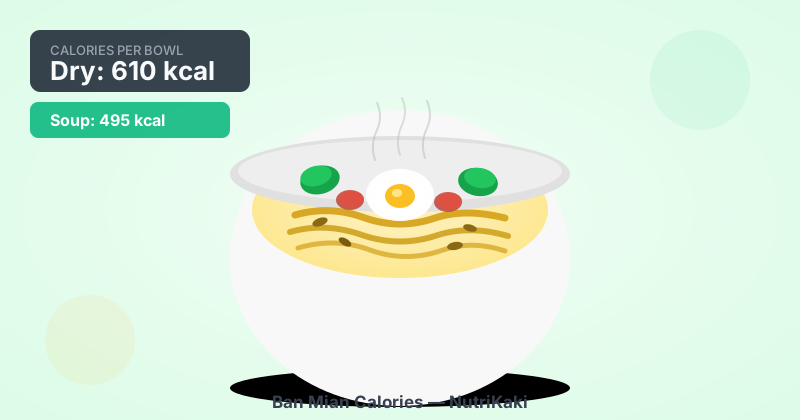
Ban Mian Calories Singapore: Dry vs Soup, Toppings & Ordering Tips
Ban mian is one of Singapore's most comforting hawker staples — a bowl of handmade flat noodles topped with minced pork, a soft-poached egg, dried anchovies, and leafy greens. It's humble, filling, and remarkably affordable. But if you're watching your calorie intake, you've probably wondered: how many calories are in ban mian, and does it matter whether you order it dry or in soup?
The answer, it turns out, is that the two styles are closer in calories than you'd expect — dry ban mian typically runs only about 40–65 kcal more than its soupy counterpart, since soup ban mian comes in a noticeably larger default bowl. In this guide, we break down ban mian calories in Singapore using data from the Health Promotion Board (HPB), compare the dry and soup variants head-to-head, examine how common toppings shift the numbers, and give you practical tips for ordering smarter without sacrificing the flavours you love.
What Is Ban Mian?
Ban mian (板面), which translates literally as "board noodle" or "flat noodle," is a Hakka-Chinese dish that has become deeply embedded in Singapore's hawker food culture. The defining feature is the noodle itself: thick, hand-pressed or hand-torn flat noodles made from wheat flour, giving them a chewy, slightly uneven texture that carries broth beautifully.
A standard ban mian stall typically offers two formats. The soup version comes in a savoury broth — often pork- or anchovy-based — with the noodles submerged alongside minced pork, a poached or raw egg cracked directly into the hot soup, dried shrimp, mushrooms, and a generous handful of leafy greens like chai sim or baby spinach. The dry version (干捞) is tossed in a dark soy and chilli oil mixture, served with a separate small soup on the side. That coating of oil and dark soy is what drives up the calorie count significantly.
You'll also often see you mian (油面) offered as an alternative — these are smoother, pre-made yellow wheat noodles with a slightly denser texture. It isn't a separately tracked dish in HPB's database (it's treated as an alias for ban mian), so we address it separately below.
Ban Mian Calories Singapore: Dry vs Soup
Based on HPB Singapore nutritional data and typical hawker portion sizes, here is how the two main ban mian variants compare:
| Variant | Calories (kcal) | Carbs (g) | Protein (g) | Fat (g) | Sodium (mg) |
|---|---|---|---|---|---|
| Soup Ban Mian (standard) | ~610 | 88 | 22–28 | 14–18 | 2,312 |
| Dry Ban Mian (standard) | 550–672 | 89 | 22–28 | 18–28 | 1,819 |
| Soup Ban Mian (extra egg) (estimate) | 680–690 (estimate) | 88 | 28–34 (estimate) | 17–22 (estimate) | 2,312 |
| Dry Ban Mian (extra egg) (estimate) | 620–750 (estimate) | 89 | 28–34 (estimate) | 24–35 (estimate) | 1,819 |
| You Mian (soup) — alias for Ban Mian, not a separate HPB dish | ~610 | 88 | 22–28 | 12–16 | 2,312 |
Note: The standard soup and dry ban mian rows are HPB's own "Ban mian (soup)" and "Ban mian (dry)" database entries at HPB's default bowl weight. HPB does not track an "extra egg" combo separately, so the two extra-egg rows are estimates — HPB's base bowl figures plus a typical extra egg's calories, protein and fat (~70–80 kcal) — not a distinct verified HPB entry.
Key takeaway: Soup ban mian at around 610 kcal (792 g bowl) and dry ban mian at 550–672 kcal are actually fairly close in calories — soup's larger default bowl offsets most of the oil-and-soy toss on the dry version. The wide range on the dry side reflects how generously individual stalls apply that toss: some stalls are liberal with oil; others are lighter-handed. The protein content is similar across both versions, so any extra calories in the dry format tend to come from fat rather than protein.
Why Is Dry Ban Mian Higher in Calories?
Dry ban mian's fat coating does add real calories — but in HPB's data the two styles end up fairly close overall (around 40–65 kcal apart), because soup ban mian is typically served in a larger bowl that closes most of the gap. When you order dry ban mian, the noodles are drained and then coated — sometimes quite liberally — in a mixture of dark soy sauce, light soy, sesame oil, and chilli oil. This sauce adds fat (and with it, calories) that simply isn't present when the noodles sit in a broth.
A tablespoon of sesame oil alone is around 120 kcal. Chilli oil adds another 40–80 kcal per tablespoon depending on concentration. A heavy-handed dry toss can genuinely push a bowl toward the top of its 550–672 kcal range — it just doesn't translate into a dramatically larger gap versus soup once bowl size is accounted for. The dark soy also adds sodium, though the soup version has its own, larger sodium load from the broth.
If you love the dry version but want to cut calories, the most effective ask is simply: "少油" (siu yau — less oil). Most hawkers are happy to oblige.
Calorie Impact of Common Ban Mian Toppings
The base bowl is just the starting point. The toppings you choose — and how many of them — can meaningfully shift the calorie count up or down.
| Topping | Estimated Calories Added | Notes |
|---|---|---|
| Poached / raw egg (1 egg, standard) | ~70–80 kcal | Included in base serving |
| Extra egg | +70–80 kcal | Good protein boost |
| Minced pork (standard portion) | ~80–110 kcal | Included in base serving |
| Extra minced pork | +80–110 kcal | Adds protein and fat |
| Dried anchovies (ikan bilis) | +50–80 kcal | Also very high in sodium |
| Mushrooms (shiitake, sliced) | +10–20 kcal | Low calorie, adds umami |
| Leafy greens (chai sim, spinach) | +5–15 kcal | High fibre, negligible calories |
| Lard (猪油, if offered) | +40–70 kcal per teaspoon | Request to omit if cutting fat |
| Extra chilli oil (dry version) | +40–80 kcal per tablespoon | Common add-on that stacks up |
The most impactful single topping decision is the ikan bilis. Those crispy dried anchovies are delicious — but they add 50–80 kcal of mostly fat, plus a significant sodium hit. If you're watching your intake, asking for the anchovies on the side (or skipping them) is a simple win. On the other hand, mushrooms and extra greens are almost free in calorie terms and substantially boost the micronutrient profile of your bowl.
You Mian vs Ban Mian: Is It a Different Dish?
You mian — the pre-made yellow wheat noodles some stalls use instead of hand-torn flat noodles — is not tracked as a separate dish in HPB's food database; it's treated as an alias for ban mian rather than a distinct entry with its own verified nutrition profile. So while the noodles look and feel different (you mian is smoother and denser, with a higher glycaemic index), there isn't a reliable, HPB-backed calorie difference to point to.
For tracking purposes, it's reasonable to log a you mian bowl using the same ban mian values above, based on whether it's served dry or in soup. If you do have a personal preference on texture or glycaemic response, the handmade flat noodles are generally considered the gentler option, but treat that as a texture note rather than a confirmed calorie saving.
Is Ban Mian a Healthy Hawker Option?
Relative to many other hawker dishes, ban mian holds up quite well — particularly the soup version. Here's why:
Protein: A standard bowl delivers 22–28g of protein from the combination of minced pork and egg. That's a meaningful contribution toward the average adult's daily protein needs and helps with satiety, so you're less likely to snack an hour later.
Vegetables: Ban mian is one of the few hawker noodle dishes that reliably comes with a generous handful of greens. Spinach, chai sim, or baby bok choy all contribute fibre, vitamins, and minerals at minimal calorie cost. You can often ask for extra vegetables without additional charge.
Calories: At around 610 kcal (792 g bowl) for soup ban mian, it's a reasonable one-dish meal for most adults — meaningfully lighter than char kway teow (989 kcal per HPB's official plate) and nasi lemak with chicken wing (831 kcal, 410 g plate), though a bit heavier than laksa (429 kcal), which has a smaller reference bowl in HPB's data.
Sodium: This is where ban mian needs a real caveat. Per HPB data, dry ban mian carries around 1,819 mg of sodium and soup ban mian around 2,312 mg per bowl — the soup version alone can exceed the HPB's recommended daily sodium intake of 2,000 mg in a single meal. Drinking less of the broth is the single most effective way to reduce your sodium intake from this dish.
Carbohydrates: A standard serving contains 60–75g of carbohydrates, which is moderate-to-high. If you're managing blood sugar, asking for a smaller noodle portion or choosing extra protein and vegetables as the bulk of your bowl can help moderate the glycaemic impact.
Smart Ordering Tips for Ban Mian
You don't need to give up ban mian to eat well. A few small adjustments at the stall can shave 100–200 kcal off your bowl without sacrificing the dish's character:
1. Choose soup over dry if you're minimising oil, not chasing a big calorie cut. Switching from dry to soup ban mian only saves roughly 40–65 kcal per meal, since soup's larger bowl offsets most of what you save by skipping the oil and soy toss. It's still a reasonable swap if you're avoiding added fat, but don't expect a dramatic calorie difference — and remember soup brings its own sodium load.
2. Ask for 少油 (less oil). Whether you're ordering dry or soup, you can ask the hawker to go lighter on the oil. Most are accommodating, especially if you order during a quieter period. For the dry version, this alone can knock 40–80 kcal off your bowl.
3. Skip or halve the ikan bilis. Ask for the crispy anchovies on the side, then use just a small pinch for flavour. You'll still get the textural contrast and umami pop without the full sodium and calorie hit.
4. Load up on vegetables. Ask for extra vegetables — most stalls will add more spinach or chai sim for free or a small charge. You get more volume, more fibre, and more micronutrients for virtually zero extra calories.
5. Drink less broth. The noodles and toppings are the nutritious part. The broth, while flavourful, is where most of the sodium lives. Enjoy a few sips for flavour, but you don't need to finish the bowl.
6. Skip the lard. Some traditional stalls still offer a drizzle of rendered pork lard (猪油) for richness. It tastes wonderful but adds 40–70 kcal per teaspoon. Politely declining keeps your fat intake in check.
7. Add an egg, not extra pork. If you want more protein, an extra egg (~75 kcal) is a more efficient protein source per calorie than extra minced pork, which brings additional saturated fat alongside the protein.
Ban Mian Calories FAQ
Ban mian calories in Singapore run around 610 kcal (792 g bowl) for soup ban mian and 550–672 kcal for dry ban mian — the two styles are actually fairly close, since soup ban mian's larger default bowl offsets the oil coating on the dry version.
Dry ban mian is somewhat higher in calories — typically 550–672 kcal per serving — compared to soup ban mian at around 610 kcal (792 g bowl). The dark soy and chilli oil coating in the dry version adds fat, but the gap is only around 40–65 kcal since soup ban mian comes in a larger bowl. If you're watching your intake, soup ban mian is still the marginally lighter choice.
Crispy fried anchovies (ikan bilis) add around 50–80 kcal and significant sodium. An extra egg adds roughly 70–80 kcal. Adding lard or extra chilli oil can add another 40–70 kcal per teaspoon or tablespoon. Choosing poached egg over fried and skipping or halving the anchovies are the easiest calorie-saving swaps.
Ban mian is a relatively balanced hawker meal. Soup ban mian in particular offers a reasonable calorie count, moderate protein from minced pork and egg, and vegetables like bok choy or spinach. The main concern is sodium — a typical bowl can contain 1,800 to over 2,300 mg, and the soup version alone can exceed the full recommended daily limit of 2,000 mg. Eating less broth is the most effective way to reduce your sodium intake.
You mian (oil noodles) is a smoother, thinner yellow noodle some stalls offer instead of handmade ban mian, but it is not a separate dish in HPB's food database — it's treated as an alias for ban mian. There's no verified distinct calorie figure for it, so for tracking purposes it's reasonable to use the same ban mian values above regardless of which noodle a stall serves.
Track Your Ban Mian with NutriKaki
Knowing the numbers is only half the battle — logging them consistently is where real progress happens. NutriKaki is built for Singapore's hawker food culture, using HPB nutritional data to give you calorie and macro counts for ban mian, dry ban mian, and hundreds of other local dishes. Scan a dish, log a meal, and see how your hawker habits fit into your daily goals — all without giving up the food you love.
Download NutriKaki — App Store (iOS) Download NutriKaki — Google Play (Android)