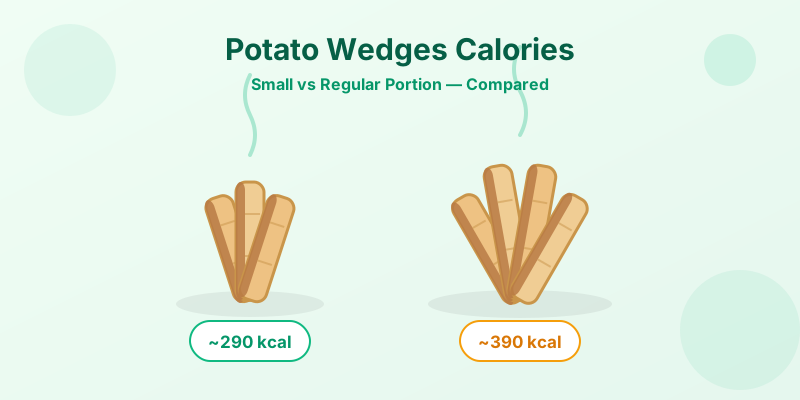
Potato Wedges Calories: What a Real Portion Actually Costs
Potato wedges show up on nearly every Western-stall tray and food-court fast-food menu in Singapore — the "safe" side order next to your chicken chop or fish and chips. It feels lighter than fries because the pieces are bigger and fewer. But per gram, thick-cut fried potato wedges are dense: HPB Singapore's food composition database puts deep-fried potato wedges at 194 calories per 100g.
The catch is that nobody actually eats 100g. A real food-court or Western-stall portion is usually 150 to 200g — our own rough real-world translation of the HPB figure, not an official measurement — which pushes the actual calorie cost of "just a side" a lot higher than the headline number suggests. Here's the full breakdown, including the fat and sodium numbers most people never check.
Potato Wedges Calories at a Glance
Portion sizes above (150g / 200g / 300g) are our own estimate of real-world Western-stall servings, not HPB measurements. HPB's lab figure is per 100g.
Full Nutrition Breakdown: Per 100g vs a Real Portion
| Nutrient | Per 100g (HPB, deep-fried) | Per ~200g portion (estimated) |
|---|---|---|
| Calories | 194 kcal | ~390 kcal |
| Protein | 3.01g | ~6.0g |
| Total fat | 11.16g | ~22.3g |
| Saturated fat | 4.76g | ~9.5g |
| Carbohydrate | 20.34g | ~40.7g |
| Sugar | 0.58g | ~1.2g |
| Fibre | 2.74g | ~5.5g |
| Sodium | 339mg | ~680mg |
The 200g column is a straight scale-up of the HPB per-100g figures based on our own portion-size estimate — treat it as a guide, not a lab measurement.
Why Potato Wedges Cost More Than They Look
Potato wedges are almost always deep-fried and cut thick with the skin left on, and that's exactly why the numbers land where they do. 11.16g of fat per 100g is substantial for a side dish, and more than 40% of that (4.76g) is saturated fat — a sign the pastry-free potato is still absorbing a fair amount of oil during frying. Cooking method tends to matter more than the ingredient itself: fried, battered sides consistently cost more than steamed, boiled or grilled starches, even when the base ingredient is the same humble potato.
To be fair, wedges aren't nutritionally empty. The 2.74g of fibre per 100g — mostly from the skin — is decent for a fried side, better than what you'd get from a peeled, mashed or pureed potato product. Protein, though, is low at just 3.01g per 100g, so wedges won't do much to keep you full compared with a protein-forward side.
How to Order Potato Wedges Smarter
Frequently Asked Questions
HPB places deep-fried potato wedges at 194 calories per 100g. A real hawker or Western-stall serving in Singapore is usually a larger 150-200g portion, not exactly 100g, which works out to roughly 290-390 calories by our own real-world estimate — always check the actual portion at your stall.
Yes, moderately. HPB data shows 339mg of sodium per 100g. A typical 200g portion works out to around 680mg, close to a third of the commonly cited 2,000mg daily sodium limit — significant for what is usually ordered as a side dish.
There's some fibre from the potato flesh and skin — 2.74g per 100g, decent for a fried side. Protein is low at 3.01g per 100g, so wedges won't keep you full the way a protein-rich side would.
Order the smallest available portion, split a large serve instead of finishing it solo, skip mayo-based dips which add fat on top of the frying oil, and pair the wedges with a protein source elsewhere in your meal rather than another fried side.
Nutrition data sourced from the Health Promotion Board (HPB) Singapore food composition database. Calorie values are approximate and vary by brand, preparation and portion size. This article is for general wellness information only and does not constitute medical or dietary advice. Consult a registered dietitian for personalised nutrition guidance. Nutrition data referenced in this article is used under licence from the Health Promotion Board (HPB) of Singapore and may not be redistributed, republished, or reused commercially without NutriKaki's prior written permission.