Satay Calories Singapore: Chicken, Beef, Pork & Mutton Ranked
Satay is one of Singapore's great pleasures — smoky, charcoal-grilled skewers of marinated meat, served with fragrant peanut sauce, raw onion, cucumber, and steamed ketupat rice cakes. It is a staple at hawker centres from Newton Food Centre to Old Airport Road.
But how many calories are you actually consuming per stick? And how much does that peanut sauce really add? If you have ever wondered whether ordering 10 sticks of chicken satay is a smart choice or a calorie landmine, this guide has the answers — all sourced from HPB Singapore's food composition database.
The short answer: chicken satay is one of the better hawker protein choices, beef and mutton sit in the middle, and pork satay is somewhat higher in fat and calories per stick. The peanut sauce, however, is where most people underestimate their intake.
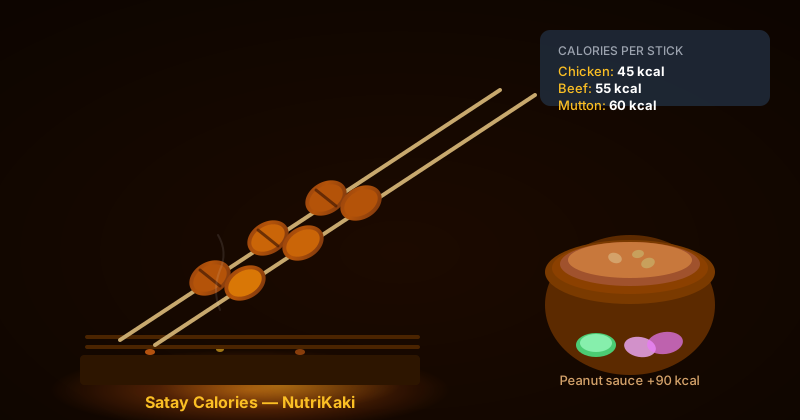
Satay Calories at a Glance (Per Stick, Without Sauce)
Per-stick figures use each meat's own HPB default stick weight (chicken 10g, beef 11.9g, mutton 10.9g, pork 11g) — which is why the ranking by stick isn't simply proportional to the per-100g calorie count. HPB catalogues a generic "pork satay" without specifying the cut, so figures shown are not belly-specific.
Full Satay Calorie Comparison Table
The table below shows the calorie range per stick and the total for a typical 10-stick order. All figures are for the meat alone, without peanut sauce or accompaniments.
| Satay Type | Kcal / Stick | Protein / Stick | Fat / Stick | 10 Sticks Total |
|---|---|---|---|---|
| Chicken Satay | 23 kcal | 2.2g | 0.7g | 230 kcal |
| Beef Satay | 27 kcal | 3.0g | 0.6g | 270 kcal |
| Pork Satay | 32 kcal (11 g) | 2.3g | 1.8g | 320 kcal |
| Mutton Satay | 33 kcal (10.9 g) | 2.5g | 1.7g | 330 kcal |
Why Chicken Satay Leads on Calories
Chicken satay typically uses breast or thigh meat that has been marinated and grilled directly over charcoal. The cooking method itself is relatively lean — no deep frying, no heavy oil. The marinade adds some sugar and turmeric but not a significant calorie load per stick.
The result is a high-protein, relatively low-fat skewer. A 10-stick order of chicken satay delivers approximately 22 grams of protein for around 230 kcal. For a hawker centre meal, that is an excellent protein-to-calorie ratio.
Compare that to pork satay, which HPB's data shows carries noticeably more fat per stick (1.8g vs chicken's 0.7g). Hawkers most commonly use fattier cuts for pork satay, and even after grilling, each stick retains more fat than chicken — which is why pork satay runs about 40% higher in calories per stick despite a similar weight.
The Hidden Calories: Peanut Sauce
Here is what most people miss when they think about satay calories. The peanut sauce is not just a garnish — for many people it is the biggest single source of calories in the entire meal.
A standard 50g serving of satay peanut sauce contains approximately 77 to 120 kcal, depending on how it has been prepared. The sauce is made from ground peanuts, coconut milk, palm sugar, lemongrass, and spices — all calorie-dense ingredients.
The problem is that hawker portions are generous, and most people dip freely. If you use a full hawker-sized portion of peanut sauce — typically 80 to 120 grams — you are adding 120 to 240 kcal on top of your satay total.
| Peanut Sauce Portion | Estimated Kcal | Fat | Sugar |
|---|---|---|---|
| Small dip (~30g) | ~45–70 kcal | ~3–5g | ~2–3g |
| Standard hawker portion (~50g) | ~77–120 kcal | ~5–9g | ~3–5g |
| Generous portion (~100g) | ~150–240 kcal | ~10–18g | ~6–10g |
The practical tip: ask for sauce on the side (which most hawkers do anyway), and be deliberate about how much you use. A light dip per stick rather than dunking the entire stick will cut your sauce calories roughly in half.
Ketupat Rice Cakes: The Other Hidden Calorie
Alongside the peanut sauce, satay is typically served with ketupat — small compressed rice cakes wrapped in woven palm leaf parcels. These are easy to overlook when counting calories because they seem like small accompaniments rather than a substantial carbohydrate portion.
HPB's default ketupat piece weighs 95 grams and contains approximately 87 kcal. A standard satay order comes with 2 to 3 pieces, which adds around 175 to 260 kcal to your total — comparable to adding a small bowl of rice.
| Accompaniment | Serving | Approx. Kcal | Notes |
|---|---|---|---|
| Ketupat (rice cake) | 1 piece (95g, HPB default) | ~87 kcal (95 g each) | Compressed rice, low fat |
| Peanut sauce | Standard portion (~50g) | ~77–120 kcal | High fat, high sugar |
| Raw onion & cucumber | Typical garnish | ~5–10 kcal | Negligible |
Raw onion and cucumber are essentially calorie-free and can be eaten freely. They also help balance the richness of the peanut sauce and charcoal-grilled meat.
Full Satay Meal: Real-World Calorie Totals
When you add up the satay sticks, peanut sauce, and ketupat, you get a much clearer picture of what a satay meal actually costs calorically. Here are three common ordering scenarios.
| Meal Scenario | Satay | Peanut Sauce | Ketupat | Total |
|---|---|---|---|---|
| Light: 5 chicken sticks, light sauce, 1 ketupat | ~115 kcal | ~50 kcal | ~87 kcal (95 g each) | ~252 kcal |
| Typical: 10 chicken sticks, standard sauce, 2 ketupat | ~230 kcal | ~100 kcal | ~174 kcal | ~504 kcal |
| Heavy: 10 pork sticks, generous sauce, 3 ketupat | ~320 kcal | ~200 kcal | ~261 kcal | ~781 kcal |
The range is still wide — from about 250 kcal for a lighter chicken satay order to nearly 780 kcal for a generous pork satay spread. That is around a third to two-fifths of an average adult's daily calorie target in a single hawker meal, and most of that swing comes from the sauce and ketupat rather than the meat itself.
Satay and Your Diet: Is It a Good Choice?
Satay — particularly chicken satay — stacks up well as a hawker option. Here is why:
Protein density: Satay provides a meaningful amount of lean protein per stick. Ten sticks of chicken satay delivers roughly 40 to 60 grams of protein, which is comparable to a grilled chicken breast. For muscle maintenance or weight management, this is a useful quality.
Cooking method: Charcoal grilling is one of the healthier cooking methods at the hawker centre. Unlike char kway teow or nasi lemak, satay is not cooked in heavy oil. The fat that drips off during grilling means each stick is leaner than the raw cut it came from.
Portion flexibility: You can order exactly as many sticks as you want. This makes satay easier to portion-control than a plate of rice or a bowl of noodles where the portion is fixed.
The caveats: Pork satay is higher in saturated fat than the other meats. And the peanut sauce, eaten liberally, can add several hundred calories. Satay is best approached with awareness of these two factors rather than treated as a universally "light" food.
Smart Ordering Tips for Satay
A few practical strategies to keep satay calorie-friendly without sacrificing enjoyment:
Choose chicken over pork or mutton. The per-stick gap is modest (23 vs 32–33 kcal), but it adds up over a 10-stick order. If you want the full satay experience, try a mixed order — mostly chicken with a few pork or mutton sticks for flavour variety.
Control the peanut sauce. Dip, do not dunk. Use one deliberate dip per stick rather than coating the entire skewer. This can save you 80 to 150 kcal on a 10-stick order without meaningfully affecting the flavour experience.
Moderate the ketupat. One piece of ketupat is often enough to balance the richness of the meal. Skipping one piece saves around 87 kcal and pushes more of your carbohydrate intake toward earlier in the day if you are practising any form of evening carb reduction.
Pair with cucumber and onion freely. These are essentially calorie-free and help you feel more satisfied while diluting the richness of the sauce.
Watch the drink. A common pattern at satay stalls is to order a cold sugary drink — teh o ais, Milo, bandung — which can add 100 to 200 kcal on top of your meal. Plain water or teh o kosong ais is the smarter companion.
Where to Find Satay in Singapore
Singapore's most famous satay destination is Lau Pa Sat (Telok Ayer Market), where the entire Boon Tat Street transforms into a satay corridor on weekend evenings. The stalls here offer all four major types — chicken, beef, mutton, and pork — along with the full ketupat and peanut sauce accompaniment.
Other well-regarded satay spots include Newton Food Centre (a perennial favourite with tourists and locals), Old Airport Road Food Centre, and Chomp Chomp Food Centre in Serangoon Gardens. Most neighbourhood hawker centres will also have at least one satay stall, particularly on evenings and weekends when the charcoal grills are fired up.
Quality can vary significantly between stalls. The best satay uses fresh meat, a proper charcoal grill rather than gas, and a peanut sauce made from scratch rather than from a commercial premix. The calorie figures in this article reflect typical hawker centre preparations.
How NutriKaki Tracks Satay
NutriKaki uses HPB Singapore's food composition database as the foundation for all its calorie data, including satay. When you log satay in the app, you can specify the type (chicken, beef, mutton, or pork), the number of sticks, and whether you included peanut sauce and ketupat.
The app also supports logging accompaniments separately, so you get a total for the full meal rather than just the skewers alone. This matters because, as this guide has shown, the sauce and rice cakes can account for a significant portion of the meal's total calorie load.
For frequent satay eaters, NutriKaki makes it easy to see trends over time — whether you are consistently choosing chicken over pork, how your sauce portions compare week to week, and how satay fits into your overall hawker food calorie pattern.
Frequently Asked Questions
It depends on the type. A stick of chicken satay contains approximately 23 kcal, beef satay around 27 kcal, mutton satay around 33 kcal (10.9 g), and pork satay around 32 kcal (11 g) per stick, based on HPB Singapore food composition data and each meat's own default stick weight. These figures are for the meat alone, without peanut sauce.
A standard 50g serving of satay peanut sauce contains approximately 77 to 120 kcal. Most hawker centre portions are generous — if you use the full accompanying portion you could easily add 150 to 200 kcal on top of your satay. Peanut sauce is one of the most overlooked hidden calorie sources at the hawker centre.
Satay can be a reasonable hawker choice, especially chicken satay which is high in lean protein and relatively low in fat. The main concern is the peanut sauce, which adds significant calories and fat. Eaten without excessive sauce, a serving of 5 to 8 chicken satay sticks provides around 115 to 185 kcal with good protein content. Pork satay is higher in saturated fat and calories per stick.
Chicken satay is the lowest calorie option at approximately 23 kcal per stick. Chicken breast or thigh meat is used, and without the fatty marbling of beef, mutton or pork, it is the leanest choice. Always account for peanut sauce when calculating your total.
Ketupat are compressed rice cakes served alongside satay. HPB's default piece weighs 95 grams and contains approximately 87 kcal. A standard satay order comes with 2 to 3 pieces of ketupat, adding around 175 to 260 kcal to your meal total before you factor in the satay sticks or peanut sauce.