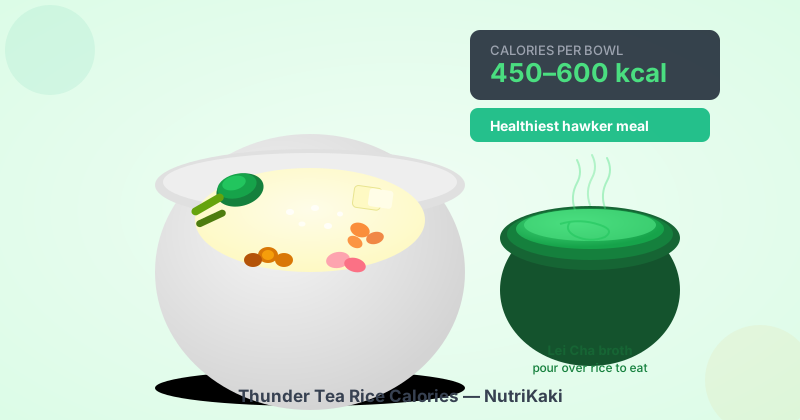
Thunder Tea Rice Calories Singapore (Lei Cha) — Complete Breakdown
NutriKaki is a tracking tool, not medical advice. Talk to your doctor about your condition.
Thunder tea rice — or lei cha (擂茶) in Hakka Chinese — has a reputation as one of Singapore's healthiest hawker dishes. It is colourful, vegetable-heavy, and comes with a dramatic pour of bright green tea broth. But how many calories does thunder tea rice actually have? And is the health halo deserved?
This guide breaks down every component of a typical lei cha plate using data from the Health Promotion Board (HPB) Singapore, explains where the calories are hiding, and compares it to other "healthy" hawker options. Spoiler: the peanuts are doing more work than you think.
What Is Thunder Tea Rice (Lei Cha)?
Thunder tea rice is a Hakka dish with roots in southern China, brought to Singapore by Hakka immigrants. The name comes from the traditional preparation method — the ingredients for the tea broth were ground using a pestle in a grooved ceramic bowl, making a sound like thunder.
In Singapore, lei cha is most commonly found at Hakka-style stalls in hawker centres and food courts, particularly popular at places like People's Park Food Centre, Maxwell Food Centre, and various Kopitiam outlets. The dish consists of:
- White (or brown) rice as the base
- Multiple stir-fried vegetable toppings — typically 5 to 8 different varieties
- Firm tofu, usually cut into small cubes
- Dried shrimp (hae bee), small and scattered throughout
- Roasted peanuts, often generously portioned
- Green tea herb broth served in a separate bowl for pouring over the rice
The vegetable toppings vary by stall but commonly include long beans, holy basil, chai poh (preserved radish), kai lan, spinach, corn kernels, and sometimes tau kwa (firm beancurd). This variety of vegetables is a large part of why lei cha earns its healthy reputation.
Thunder Tea Rice Calories: Component Breakdown
Rather than treating lei cha as a single number, it helps to understand where each calorie is coming from. Here is a breakdown based on typical portion sizes found at Singapore hawker stalls, cross-referenced with HPB Singapore food composition data:
| Component | Typical Portion | Calories (kcal) | Notes |
|---|---|---|---|
| White rice (base) | 1 bowl (~200g cooked) | ~200 | Some stalls offer brown rice for more fibre |
| Stir-fried vegetable toppings | 5–8 varieties (~150g total) | ~100–150 | Cooked with a small amount of oil |
| Roasted peanuts | ~20–30g | ~80–120 | The hidden calorie driver — calorie-dense |
| Firm tofu (tau kwa) | ~80g | ~60 | Good source of plant-based protein |
| Dried shrimp (hae bee) | ~10g | ~30 | Adds sodium and umami flavour |
| Green tea herb broth | 1 bowl (~250ml) | ~20–40 | Low calorie but moderate–high sodium |
| Total of estimates above | Full meal | ~450–600 kcal (estimate) | Component estimates assume a modest rice and peanut portion |
| HPB whole-dish reference | 431g bowl | 612 kcal (431 g bowl) | HPB's own measured figure — use this one for tracking |
Why Peanuts Are the Hidden Calorie Driver
Peanuts are the most calorie-dense component on a lei cha plate, and they are easy to underestimate because they are small and scattered. At approximately 567 kcal per 100g, even a modest 20g portion of roasted peanuts adds 113 kcal to your meal.
At more generous stalls, you might receive 30g or more of peanuts — that alone is 170 kcal, roughly the same as an extra half-bowl of rice. Because peanuts are also high in fat (though primarily heart-healthy unsaturated fats), they can tip an otherwise moderate-calorie dish into a heavier meal.
Practical tip: Ask the stall to give you half the peanuts, or "少花生" (shao hua sheng) in Mandarin. This single change can reduce your meal by 60–80 kcal without affecting the other nutritional benefits of the dish.
Is Thunder Tea Rice Actually Healthy? Full Analysis
Calories: Yes, it is relatively low
At 612 kcal (431 g bowl) for a full bowl, thunder tea rice is heavier than its health-food reputation suggests. For context, a plate of Hainanese chicken rice is around 488 kcal and a bowl of laksa is 429 kcal (604 g bowl) per HPB data — both meaningfully lighter than thunder tea rice — while char kway teow can reach 700–950 kcal, well above it. Lei cha's genuine strength is its fibre and vegetable content, not a low calorie count.
Fibre: One of the highest in hawker food
The multiple vegetable toppings are where thunder tea rice truly shines. With 5 to 8 different vegetables on a single plate, a serving can provide 6–10g of dietary fibre — well above the average hawker meal and meaningfully contributing to the HPB-recommended 25–30g daily target. High fibre intake supports digestive health, helps with satiety, and can assist with blood sugar regulation.
Protein: Moderate and well-rounded
A plate of thunder tea rice provides approximately 15–22g of protein from a combination of tofu (plant-based protein), dried shrimp (a concentrated protein source), and peanuts. This is lower than meat-heavy dishes like chicken rice or fish soup, but the protein is distributed across multiple sources, and the tofu contributes complete amino acids.
Sodium: The main caveat
The green tea herb broth is the nutritional weak point of the dish. While it is extremely low in calories (20–40 kcal), the broth can contain 400–600mg of sodium per bowl. Combined with the dried shrimp and any seasonings in the vegetable toppings, a full serving of thunder tea rice contributes approximately 1,298mg of sodium per HPB data — close to two-thirds of the daily recommended limit of 2,000mg, notably higher than earlier estimates suggested.
Practical tip: Rather than pouring the entire bowl of broth over your rice, use just enough to moisten the dish. If you enjoy the flavour, take small sips but do not feel obliged to finish the bowl.
Fat: Mostly healthy fats
The fat content of thunder tea rice comes primarily from peanuts and the small amount of oil used in stir-frying the vegetables. Peanuts are high in monounsaturated and polyunsaturated fats — the same types found in olive oil — which are generally considered heart-healthy. Tofu contributes small amounts of polyunsaturated fat as well. The overall fat profile of the dish is considerably better than fried hawker options.
Thunder Tea Rice vs Other "Healthy" Hawker Dishes
How does lei cha stack up against the other hawker dishes frequently recommended as healthy options? Here is a direct comparison using HPB Singapore reference data:
| Hawker Dish | Calories (kcal) | Protein (g) | Fibre (g) | Sodium (mg) |
|---|---|---|---|---|
| Thunder Tea Rice (Lei Cha) | 612 | 25.4 | 7.5 | 1,298 |
| Yong Tau Foo (clear broth, 8 pcs) | 594 | 12–18 | 3–5 | 700–900 |
| Sliced Fish Soup (clear) | 84 | 22–28 | 1–3 | 900–1,200 |
| Economy Rice (2 veg + 1 meat) | 877 | 18–25 | 3–5 | 2,125 |
| Hainanese Chicken Rice | 488 | 28–35 | 1–2 | 1,227 |
| Char Kway Teow | 700–950 | 18–24 | 2–4 | 1,200–1,800 |
| Laksa | 429 | 18–24 | 2–3 | 3,086 |
Thunder tea rice is not the lowest-calorie hawker option — sliced fish soup in clear broth comes in dramatically lower, at just 84 kcal (561 g bowl). Yong tau foo, often assumed to be a light choice, is actually comparable to or higher than thunder tea rice per HPB data, at 594 kcal (771 g bowl). Thunder tea rice's real strength is its fibre content, which most other hawker dishes on this list cannot match. For someone managing weight while ensuring adequate micronutrient and fibre intake, thunder tea rice is genuinely one of the best all-round choices available — even if it isn't the single lowest-calorie one.
Thunder Tea Rice for Specific Health Goals
Weight management
Lei cha is a solid choice — but for its fibre, not because it is low in calories. At 612 kcal (431 g bowl) per HPB's reference bowl it is a full-sized main meal, so budget for it as one. The high fibre content promotes satiety, meaning you are less likely to feel hungry again quickly. Ask for less peanuts and a smaller rice portion if you want to bring the total down meaningfully — peanuts alone can account for 110–170 kcal.
Diabetes and blood sugar control
The high vegetable content slows digestion and moderates the glycaemic response compared to plain white rice meals. Requesting brown rice — available at many lei cha stalls — further reduces the glycaemic impact. The dish's high fibre and moderate protein content both support stable blood sugar levels. However, the broth sodium should be monitored if you also have hypertension.
Heart health
The fat profile of thunder tea rice is largely favourable, with unsaturated fats from peanuts and minimal saturated fat. The multiple vegetable toppings provide antioxidants and phytonutrients. The main risk factor is sodium from the broth — those managing hypertension should limit the broth consumed.
Vegetarian or plant-based eating
Thunder tea rice is naturally vegetarian-friendly when the dried shrimp is omitted — a request many stalls accommodate. The plant-based protein from tofu and peanuts, combined with complex carbohydrates and a wide variety of vegetables, makes it a well-rounded plant-based meal. Some stalls serve a fully vegan version without any animal products.
Tips for Ordering a Healthier Lei Cha
- Ask for less peanuts — saves 60–80 kcal and reduces fat intake while keeping all other benefits intact.
- Request brown rice — adds more fibre and has a lower glycaemic index than white rice. Not all stalls offer this, but it is worth asking.
- Pour the broth sparingly — the green tea broth is flavourful but high in sodium. Use just enough to moisten the rice rather than pouring the full bowl.
- Ask for no chai poh (preserved radish) — if you are especially sodium-sensitive, omitting preserved radish removes a significant hidden sodium source.
- Skip the extra dried shrimp — some stalls offer to add more hae bee, but the standard amount already adds sodium. Declining extra shrimp is an easy sodium reduction.
- Choose a stall with more vegetable variety — the more different vegetables on your plate, the broader the range of vitamins, minerals, and phytonutrients you receive.
Where to Find Thunder Tea Rice in Singapore
Lei cha stalls are found across Singapore, though they are not as common as char kway teow or chicken rice stalls. Some well-known spots include:
- People's Park Food Centre (Chinatown) — multiple lei cha options
- Maxwell Food Centre (Tanjong Pagar) — popular with the lunch crowd
- Amoy Street Food Centre (CBD) — convenient for weekday lunches
- Kopitiam and FoodJunction outlets — some branches carry Hakka lei cha stalls
- Yong Tau Foo stalls — some Hakka-run YTF stalls also serve lei cha
Prices typically range from $4 to $6 for a standard plate, making it one of the more affordable hawker meals given the variety of toppings included.
Frequently Asked Questions
A standard bowl of thunder tea rice contains 612 kcal, per HPB Singapore's whole-dish figure for its 431g reference bowl. Component estimates give a rough sense of where those calories sit: rice around 200 kcal, vegetable toppings 100 to 150 kcal, peanuts 80 to 120 kcal, tofu 60 kcal, and the tea broth 20 to 40 kcal. Portion size and peanut generosity are the main sources of variation between stalls.
Thunder tea rice is considered one of Singapore's healthier hawker options. It is high in dietary fibre from multiple vegetable toppings, provides plant-based protein from tofu, dried shrimp, and peanuts, and the green tea herb broth contains antioxidants. The main concerns are sodium content in the broth and the calorie density of peanuts. Compared to dishes like chicken rice or nasi lemak, lei cha is lower in fat and higher in fibre.
Thunder tea rice (lei cha in Hakka Chinese) consists of white or brown rice topped with a variety of stir-fried vegetables — typically long beans, basil, chai poh (preserved radish), kai lan or spinach, and sometimes corn. Additional toppings include firm tofu, dried shrimp (hae bee), and roasted peanuts. The dish is served with a bowl of green tea herb broth made from green tea leaves, basil, mint, and peppercorns blended together.
Peanuts are calorie-dense at around 567 kcal per 100g. A generous portion of roasted peanuts on a plate of thunder tea rice can easily add 80 to 120 kcal to the meal. Because peanuts are small and scattered across the plate, it is easy to underestimate their contribution. Asking for less peanuts or half a portion can meaningfully reduce total calorie intake without sacrificing the dish's other nutritional benefits.
Yes, the green tea herb broth served with thunder tea rice can be relatively high in sodium, with estimates around 400 to 600mg per bowl depending on the stall. While the broth itself is low in calories (20 to 40 kcal), those watching their sodium intake — for example people managing blood pressure — may want to pour only a small amount over the rice rather than drinking the full bowl. HPB Singapore recommends keeping daily sodium intake under 2,000mg.