Wonton Mee Calories Singapore: Dry vs Soup — Full Breakdown
Wonton mee is one of Singapore's most beloved hawker dishes — springy egg noodles tangled with silky wontons, a few slices of glistening char siew, and a scattering of choy sum. Whether you order it dry (with that addictive dark sweet sauce) or in a clear savoury broth, it feels like a reasonable meal. But how many calories are actually in a bowl?
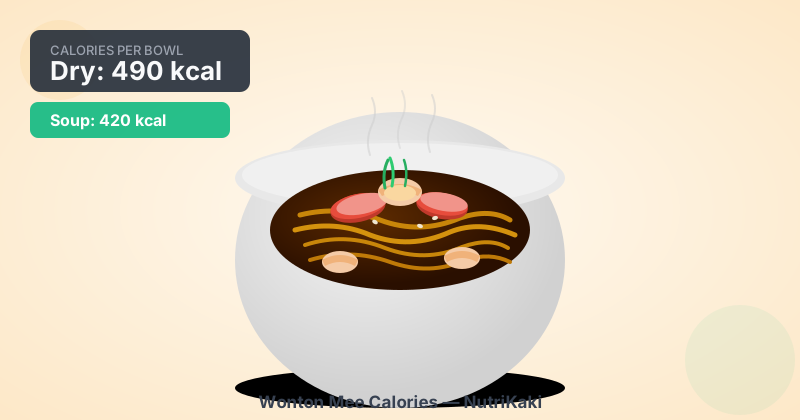
The short answer, and it may surprise you: dry wonton mee comes to approximately 625 kcal (388 g bowl) per HPB Singapore data, while soup wonton mee is actually slightly higher, at approximately 644 kcal (678 g bowl). Both are meaningfully higher than the figures often quoted, and soup is not the calorie-saver most people assume it is. This guide breaks it all down component by component, so you know exactly where the calories are hiding — and how to shave some off without giving up flavour.
Dry vs Soup Wonton Mee: Calorie Comparison Table
The table below compares both styles with and without the standard char siew topping, giving you a clearer sense of which components drive the most calories.
| Serving Style | With Char Siew | Without Char Siew | Protein | Carbs | Fat |
|---|---|---|---|---|---|
| Dry Wonton Mee | 625 kcal (388 g bowl) | ~505 kcal (est.) | ~18–22 g | ~58–68 g | ~12–18 g |
| Soup Wonton Mee | 644 kcal (678 g bowl) | ~524 kcal (est.) | ~20–24 g | ~52–62 g | ~7–11 g |
| Dry (less noodles, est.) | ~540 kcal | ~420 kcal | ~16–20 g | ~44–54 g | ~10–16 g |
| Soup (less noodles, est.) | ~565 kcal | ~445 kcal | ~18–22 g | ~38–48 g | ~5–9 g |
Note: The "With Char Siew" figures for standard dry and soup wonton mee are based on HPB Singapore food composition data for a standard hawker serving. The "less noodles" rows and "without char siew" columns are estimates scaled from those figures, since HPB doesn't catalogue every modifier separately. Notice that soup is not the lower-calorie option here — a genuine finding in HPB's data.
Breaking Down Each Component
To understand where every calorie comes from, it helps to think about wonton mee as four separate elements: the egg noodles, the wontons, the char siew, and the sauce or broth. Each one contributes differently to the final count.
Egg Noodles: The Calorie Foundation
The springy yellow egg noodles are the caloric backbone of the dish. A standard hawker serving uses approximately 120 to 150 g of cooked egg noodles, which contributes around 190 to 230 kcal — mostly from refined carbohydrates. Egg noodles have a slightly higher calorie density than rice vermicelli but are comparable to plain wheat noodles.
The noodles are blanched in boiling water before serving, so no cooking fat is added at this stage. However, in the dry version, lard or cooking oil is tossed through the noodles after blanching to keep them from clumping — adding a meaningful chunk of fat calories before the sauce even arrives.
Wonton Dumplings: Modest but Count
Each wonton dumpling weighs roughly 20 to 25 g and contains approximately 35 to 50 kcal. A standard serving comes with 4 to 5 wontons, so expect to add around 140 to 200 kcal from the dumplings. Wontons are filled primarily with minced pork and shrimp wrapped in a thin wonton skin — a relatively lean protein source compared with char siew or fried toppings.
In soup wonton mee, the wontons are simmered directly in the broth and absorb a little liquid, keeping their calorie count stable. In the dry version, they are usually blanched separately and placed on top.
Char Siew: Sweet, Calorific, and Worth Knowing About
Char siew is the single most calorie-dense component per gram. A typical 2–3 slice serving (60 to 80 g) adds approximately 110 to 150 kcal, and the range is wide because char siew preparation varies significantly between stalls. Some use leaner shoulder cuts; others use belly pork with a much higher fat-to-meat ratio. The honey or maltose glaze also adds sugar calories on top of the pork itself.
Per 100 g, char siew runs roughly 180 to 210 kcal based on HPB reference data — making it more calorie-dense than most protein sources you would find in hawker food. If you are watching your intake, requesting less char siew (or replacing it with extra wontons) is one of the most effective single changes you can make.
The Sauce (Dry) vs The Broth (Soup)
This is where dry and soup wonton mee diverge most sharply in terms of both calories and sodium.
Dry style: The dark sauce is a blend of soy sauce, oyster sauce, sesame oil, and often lard — contributing an estimated 60 to 100 kcal from fat and sugars alone. The lard added to the noodles during tossing adds a further 40 to 80 kcal depending on the stall's generosity. This is why dry wonton mee consistently lands higher on the calorie scale despite looking lighter than a soup dish.
Soup style: The broth itself (typically made from pork bones, dried prawns, and sometimes shrimp roe) adds relatively little on its own calorically, but the sodium load for the whole bowl is much higher than commonly assumed — per HPB data, a full serving of soup wonton mee carries approximately 2,895mg of sodium, well over a full day's recommended limit on its own. Drinking the full bowl of soup means taking on a very significant sodium load.
Choy Sum and Garnishes
The blanched choy sum (Chinese flowering cabbage) served alongside contributes around 10 to 20 kcal for a standard portion and adds useful fibre, vitamins C and K, and folate. The spring onion, fried shallots, and red chilli garnishes add negligible calories. Eat all your vegetables — they are essentially free calories in this context.
Dry Feels More Indulgent — But Soup Isn't the Light Choice Either
The dry version does add fat sources that the soup version largely avoids: lard tossed through the noodles after blanching, sesame oil in the sauce, and sometimes a small puddle of additional cooking oil in the base of the bowl. That instinct — that dry feels heavier — is real when it comes to fat content.
But per HPB's measured data, that extra fat doesn't translate into more total calories overall — soup wonton mee (644 kcal) actually edges out dry (625 kcal, 388 g bowl). The likely explanation is portion and broth composition: the soup version's overall serving, including the broth's own carbohydrate and sodium-dense ingredients, adds up to a similar or slightly larger total than the fat-heavy but often smaller dry portion. Char siew is equally present in both versions at most stalls, so the protein component is roughly equivalent — the real story here is that "soup equals lighter" is not a safe assumption for wonton mee specifically, even though it holds for some other noodle dishes.
How to Order Smarter at the Hawker Centre
You do not need to give up wonton mee to manage your calorie intake. Small ordering adjustments can realistically save 100 to 200 kcal without making the dish noticeably less satisfying.
- Ask for less lard or no lard (少猪油 / boh ti yiu). This is the highest-impact single request for the dry version. Lard oil is added routinely; most stall owners will accommodate the request without question. Estimated saving: 40–80 kcal.
- Request less char siew or replace it with fish dumplings. Two slices instead of three, or swapping for extra wontons, saves around 50–80 kcal and often adds a bit more lean protein.
- Ask for half portion noodles (半份面). Many stalls can do this for the same price or a small reduction. Cutting noodles by half saves roughly 80–100 kcal and leaves you room for more dumplings.
- Don't assume soup is the lighter choice. Per HPB data, soup wonton mee (644 kcal, 678 g bowl) is actually slightly higher in calories than dry (625 kcal, 388 g bowl). Choose based on your fat vs sodium priorities, not on an assumed calorie saving.
- Eat the choy sum first. Starting with vegetables slows your eating pace and fills you up faster, which can naturally lead to eating slightly less of the noodles.
- Skip finishing the soup. If you ordered soup wonton mee, enjoy the flavour but leave the broth — a full bowl's sodium load is around 2,895mg, and you save a large share of that without giving up any of the actual meal.
Comparing Wonton Mee to Other Common Hawker Noodle Dishes
| Hawker Dish | Approx. Calories (standard serving) | Notes |
|---|---|---|
| Dry wonton mee | 625 kcal (388 g bowl) | Lower fat than soup, but not lower calorie |
| Soup wonton mee | 644 kcal (678 g bowl) | Slightly higher calories than dry; much higher sodium |
| Char kway teow | 989 kcal (480 g plate) | Wok hei, lard, and cockles add up fast |
| Laksa | 429 kcal (604 g bowl) | Lighter than wonton mee on calories, but very high sodium |
| Bak chor mee (dry) | 563 kcal (430 g bowl) | Slightly lighter than wonton mee |
| Fishball noodle soup | 519 kcal (798 g bowl) | Lighter than wonton mee, though not as light as once thought |
| Mee pok with minced pork | ~400–510 kcal | Comparable to or slightly lighter than wonton mee |
In context, wonton mee is heavier than several noodle dishes it's often grouped with — including laksa, bak chor mee, and fishball noodle soup — though it remains well below char kway teow. It is not the lean option its reputation suggests, and the soup version offers no calorie advantage over dry.
Tracking Wonton Mee with NutriKaki
Wonton mee is one of the dishes you can log directly in NutriKaki, Singapore's hawker-first calorie tracker powered by HPB food composition data. NutriKaki shows values from HPB data for actual Singapore hawker portions — dry or soup style, with or without char siew.
You can also adjust the serving size within the app to reflect whether you asked for half noodles, extra wontons, or a specific portion of char siew. The app tracks your full meal against your daily targets and shows you at a glance where you stand for the rest of the day.
Frequently Asked Questions
A standard serving of dry wonton mee contains approximately 625 kcal (388 g bowl) per HPB Singapore data — notably higher than many people assume. Portion size and how much char siew and lard oil are added will shift this up or down somewhat.
Not in calorie terms — soup wonton mee actually runs slightly higher at approximately 644 kcal (678 g bowl), compared with 625 kcal (388 g bowl) for dry, the opposite of the common assumption. The soup style does typically use less lard, so it's lower in fat, but a full bowl's sodium load is very high, around 2,895mg, so it isn't unconditionally healthier for people managing blood pressure.
A 2–3 slice serving of char siew (60–80 g) adds approximately 110 to 150 kcal. Char siew is among the more calorie-dense proteins in Singapore hawker food due to its sugar glaze and variable fat content. Leaner shoulder cuts are lower; belly cuts are higher.
Each wonton contains roughly 35 to 50 kcal. A standard 4–5 wonton serving contributes 140 to 200 kcal. Wontons are a relatively lean protein addition and are worth keeping — the char siew is where the bigger cuts can be made.
The most effective strategies: ask for less lard or no lard (saves 40–80 kcal), request less char siew, and ask for half portion noodles (saves 80–100 kcal). Choosing soup over dry no longer reliably saves calories per HPB data, though it does typically mean less fat. Combining two or three of the other adjustments can realistically bring a 625 kcal (388 g bowl) dry wonton mee down to around 420 to 445 kcal.
Calorie values are estimates based on HPB Singapore food composition data and standard Singapore hawker serving sizes. Actual values vary by stall, portion size, and cooking method. This content is for general informational purposes only and does not constitute medical or dietary advice. Consult a registered dietitian for personalised nutrition guidance. Nutrition data referenced in this article is used under licence from the Health Promotion Board (HPB) of Singapore and may not be redistributed, republished, or reused commercially without NutriKaki's prior written permission.