Yong Tau Foo Calories Singapore: Every Item Counted
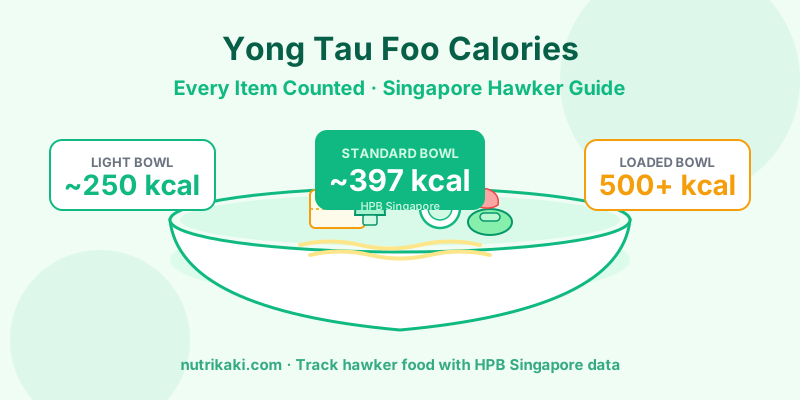
Yong tau foo is one of Singapore's most popular hawker dishes — and one of the most misunderstood from a calorie perspective. Many Singaporeans assume it is automatically a light, healthy choice. Per HPB's measured data, that's only partly true: a bowl with a mixed selection of steamed and fried items, soup, and no noodles already runs around 594 kcal (771 g bowl), and a standard bowl with noodles comes in at approximately 845 kcal (971 g bowl) — both considerably higher than the dish's reputation suggests.
The difference between orders still comes down to what you pick. Unlike most hawker dishes where the stall controls the recipe, yong tau foo puts the choices in your hands. This guide gives you the per-item calorie data — based on HPB Singapore's food composition database — so you know exactly what each addition costs.
According to HPB Singapore, a standard yong tau foo portion with noodles comes in at approximately 845 kcal (971 g bowl). A mixed no-noodle bowl (soup, tofu, and a typical variety of items) is approximately 594 kcal (771 g bowl). Your real number still depends on every choice you make at the display tray — but even the "light" version is a moderate-calorie meal, not a tiny one.
Yong Tau Foo Calorie Overview
(soup, no noodles)
(noodles + items)
(fried items + sauce)
Note: HPB measures some yong tau foo combinations as single reference dishes rather than a strict sum of parts, so these headline figures won't always match exactly what you get by adding up the per-item table below — yong tau foo's calorie count is inherently variable depending on exactly which items you choose.
Calories Per Yong Tau Foo Item
This is the data that matters most. Every item you pick from the display tray adds to your total. The values below are per piece, based on average hawker centre portions.
| Item | Calories (per piece) | Protein | Notes |
|---|---|---|---|
| Plain tofu (tau kwa) | ~25–35 kcal | ~3g | ✅ Lowest calorie pick |
| Mushroom stuffed with fish paste | ~30–45 kcal | ~3g | ✅ Very light |
| Fish ball (1 piece, boiled) | ~20–25 kcal | ~3g | ✅ Great protein per calorie |
| Bitter gourd stuffed with fish paste | ~35–50 kcal | ~4g | ✅ Good fibre |
| Chilli stuffed with fish paste | ~40–55 kcal | ~4g | ✅ Popular choice |
| Brinjal (eggplant) stuffed with fish paste | ~40–55 kcal | ~4g | ✅ Light, filling |
| Lady's finger (okra) stuffed | ~35–50 kcal | ~3g | ✅ High fibre |
| Crab stick / surimi | ~30–45 kcal | ~4g | Moderate sodium |
| Fish cake (fish paste slice) | ~40–55 kcal | ~5g | Good protein |
| Tofu puff stuffed (tau pok) | ~89 kcal (56 g piece) | ~4g | ⚠️ Oil absorbed in puff — higher than often assumed |
| Fried fish ball | ~27 kcal | ~1g | Small default portion — lower than expected, but still more oil than boiled |
| Fried tofu (tau kwa, deep-fried) | ~70–95 kcal | ~5g | ⚠️ High oil absorption |
| Fried wonton skin / dumpling | ~60–85 kcal | ~3g | ⚠️ High carb + fat |
| Fried beancurd skin roll | ~80–110 kcal | ~5g | ❌ Highest calorie item |
Noodle Calories: Which to Choose
The noodle base is one of the biggest levers in your total yong tau foo calorie count. Most stalls offer several options.
| Noodle Type | Calories (1 portion) | Carbs | Notes |
|---|---|---|---|
| Bee hoon (rice vermicelli) | ~140–155 kcal | ~32g | ✅ Lowest carb option |
| Kway teow (flat rice noodles) | ~145–165 kcal | ~34g | ✅ Light, mild flavour |
| Udon (if available) | ~150–175 kcal | ~34g | Filling, low fat |
| Yellow mee (egg noodles) | ~160–185 kcal | ~33g | ⚠️ Higher calorie, more sodium |
| Laksa noodles / thick beehoon | ~170–195 kcal | ~38g | ⚠️ Larger portion size |
| No noodles (skip entirely) | 0 kcal | 0g | Popular for low-carb diets — add extra tofu instead |
Sauce Calories: The Hidden Add-On
The sauce is where many Singaporeans unknowingly add 50 to 80 kcal to what feels like a light meal. Yong tau foo sweet sauce is made from a blend of soy sauce, sugar, and sometimes peanut paste — and most stalls pour a generous amount by default.
| Sauce Type | Calories (per serving) | Sugar | Recommendation |
|---|---|---|---|
| Chilli sauce (1 tbsp) | ~10–20 kcal | ~2g | ✅ Lowest calorie option |
| Sweet sauce (2 tbsp, standard) | ~40–60 kcal | ~8–12g | ⚠️ Ask for less or on the side |
| Sweet sauce (full pour, 3–4 tbsp) | ~65–90 kcal | ~14–18g | ⚠️ Default at many stalls |
| Peanut sauce (2 tbsp, if available) | ~80–110 kcal | ~5g | ❌ High fat, high calorie |
How Your Yong Tau Foo Choices Add Up
To see how dramatically different two bowls of yong tau foo can be, here is a side-by-side comparison of a light order versus a heavy order.
| Component | Light Bowl | Heavy Bowl |
|---|---|---|
| Noodles | Bee hoon (~150 kcal) | Yellow mee (~180 kcal) |
| Item 1 | Plain tofu (~30 kcal) | Fried beancurd skin roll (~95 kcal) |
| Item 2 | Bitter gourd (~45 kcal) | Fried tofu puff (~85 kcal) |
| Item 3 | Fish ball, boiled (~22 kcal) | Fried fish ball (~27 kcal) |
| Item 4 | Brinjal stuffed (~48 kcal) | Fried wonton (~75 kcal) |
| Item 5 | Mushroom stuffed (~38 kcal) | Tofu puff stuffed (~89 kcal, 56 g piece) |
| Sauce | Chilli, 1 tbsp (~15 kcal) | Sweet sauce, full pour (~80 kcal) |
| Total | ~348 kcal | ~631 kcal |
Same dish, same stall, same number of items — but a 283 kcal difference, mainly driven by the noodle type, the sauce, and most of the fried items (fried fish ball is a notable exception — its small default portion actually makes it lower-calorie than the boiled version, per HPB data). This is why yong tau foo's reputation as a "healthy" dish is only partly true: individual steamed items are genuinely lean, but the noodles, sauce, and most fried add-ons you layer on top determine the final number — and that final number is often higher than people expect even before things go heavy.
How to Order Yong Tau Foo to Reduce Calories
Yong Tau Foo vs Other Hawker Dishes
| Dish | Approx. Calories | Protein | Verdict |
|---|---|---|---|
| Wonton Mee (dry) | ~625 kcal | ~29g | ⚠️ Heavier than it looks |
| Chicken Rice (steamed) | ~450–550 kcal | ~30g | ⚠️ High fat rice |
| Thunder Tea Rice | 612 kcal | ~15g | ⚠️ High fibre, but heavier than assumed |
| Yong Tau Foo (mixed, soup, no noodles) | 594 kcal | ~18g | ⚠️ Moderate — not as light as its reputation |
| Yong Tau Foo (standard, with noodles) | 845 kcal | ~22g | ❌ Heavier than most people assume |
| Nasi Lemak (full plate) | ~600–800 kcal | ~22g | ❌ Very high fat |
| Cai Png (3 veg, 1 protein) | 1,064 kcal | ~20g | ❌ Variable, but often the heaviest of this list |
| Char Kway Teow | 989 kcal | ~18g | ❌ High fat, high sodium |
Is Yong Tau Foo Good for Weight Loss?
Yong tau foo can still be a solid hawker centre choice for Singaporeans on a weight-loss plan — but per HPB data it requires more deliberate ordering than its reputation suggests. A mixed no-noodle bowl of soup yong tau foo with a typical selection of steamed and fried items already sits at around 594 kcal (771 g bowl), and adding bee hoon brings a standard bowl to roughly 845 kcal. Both provide meaningful protein from the fish paste fillings, which helps you stay full until your next meal, but neither is the ultra-light option it's sometimes assumed to be.
The dish still scores well on food quality. Unlike many hawker dishes that rely on heavy frying or sugar-heavy sauces as the primary flavour carrier, yong tau foo gets much of its taste from the seasoned fish paste, the freshness of the vegetables, and the clean broth. The issue is less about "bad" ingredients and more about the sheer number and type of items people tend to pick, plus the noodles.
The practical trap is sweet sauce, fried items, and noodles stacking on top of each other. If you habitually load your bowl with tau pok, fried beancurd skin, noodles, and a full ladle of sweet sauce, you can push toward 1,000 kcal or more — without it feeling like an indulgent meal. That is the yong tau foo paradox: it does not taste heavy, so it is easy to underestimate what's actually in the bowl.
Frequently Asked Questions
Per HPB Singapore data, a standard yong tau foo bowl with noodles contains approximately 845 kcal (971 g bowl) — considerably higher than the light reputation the dish carries. A mixed bowl with soup, tofu, and a typical variety of items but no noodles is around 594 kcal (771 g bowl). A heavier version with more fried items, yellow mee, and full sweet sauce can push toward 1,000 kcal or more.
Yong tau foo can be a nutritionally balanced hawker choice when ordered thoughtfully, and individual items are relatively low in fat and high in protein from fish paste. But per HPB data the whole-bowl calorie counts are higher than often assumed, so it isn't automatically a "light" order. The main levers are the noodles, sweet sauce, fried items, and moderate sodium from the fish paste and broth. Choosing steamed items, limiting noodles, and sauce on the side all help keep a bowl genuinely light.
A standard pour of sweet sauce at a hawker centre is approximately 3 to 4 tablespoons, which adds 50 to 80 kcal and 10 to 16g of sugar. Asking for sauce on the side and using just one tablespoon cuts this to 15 to 25 kcal — a saving of 30 to 60 kcal with no loss of flavour impact.
The lowest-calorie items are plain tofu at 25 to 35 kcal, boiled fish ball at around 20 to 25 kcal, mushroom stuffed with fish paste at 30 to 45 kcal, bitter gourd stuffed with fish paste at 35 to 50 kcal, and lady's finger (okra) at 35 to 50 kcal. Interestingly, fried fish ball is also low, at around 27 kcal per piece, since its default portion is small — but frying still adds more oil and fat than a boiled item of equivalent size. Sticking to steamed vegetables stuffed with fish paste is the most reliable strategy for keeping each item under 55 kcal.
Taking noodles adds 140 to 185 kcal depending on the type. Bee hoon (rice vermicelli) is the lightest at around 140 to 155 kcal. If you are targeting a low-carbohydrate meal, skipping noodles and asking for extra tofu or vegetables in their place is a popular approach — though per HPB data even a no-noodle bowl with a typical item mix runs around 594 kcal (771 g bowl), so it's a moderate-calorie choice rather than a very low one. Many yong tau foo regulars find the no-noodle bowl equally filling, thanks to the protein from the fish paste items.
Nutrition data sourced from the Health Promotion Board (HPB) Singapore food composition database and representative hawker centre portion analysis. Per-item calorie values are approximate and vary by stall, fish paste recipe, item size, and preparation method. This article is for general wellness information only and does not constitute medical or dietary advice. Consult a registered dietitian for personalised nutrition guidance. Nutrition data referenced in this article is used under licence from the Health Promotion Board (HPB) of Singapore and may not be redistributed, republished, or reused commercially without NutriKaki's prior written permission.