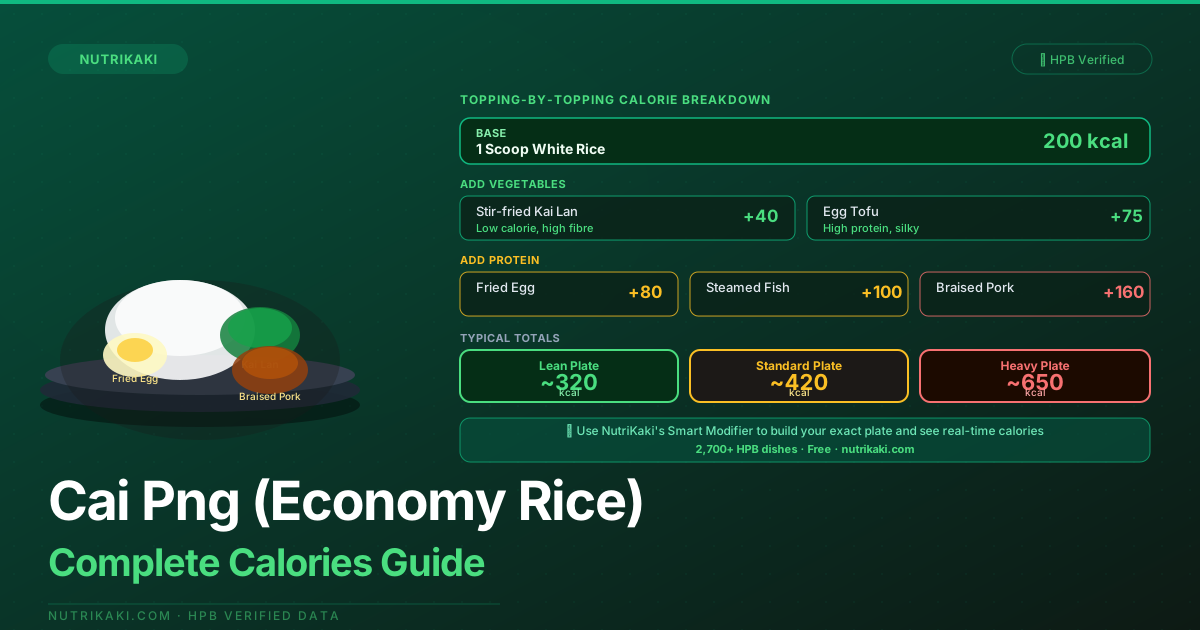
Cai Png (Economy Rice) Calories: Every Topping Broken Down
Cai png — economy rice — is the most democratic meal in Singapore. A few dollars, a mountain of choices, and you're done in minutes. It's eaten by students, office workers, and uncles at the kopitiam alike. For many Singaporeans, it's the default lunch three or four times a week.
But here's the problem: cai png has no fixed calorie count. A lean, self-built plate can leave the stall around 320 kcal; a plate loaded with multiple proteins and gravy can run well past 1,000 kcal. Unlike chicken rice or laksa — where the dish is mostly fixed — cai png is a custom build every single time.
HPB Singapore's official database doesn't track cai png topping-by-topping — it records whole combo plates instead, like "Economic rice (2 vegetables, 2 meats)," which range from about 610 kcal for the lightest fish-and-veg combo to over 1,200 kcal for a heavy multi-meat plate with fried items. This guide uses those combo entries and HPB's individual dish and ingredient data to build an estimated per-topping breakdown, so you can see how your specific choices add up — but the individual topping figures below are estimates, not standalone verified HPB entries, and real stall portions vary.
What Goes Into the Calorie Count
A cai png plate has four components that add up:
- Rice — the base, often underestimated
- Vegetables — low calorie, but preparation method matters
- Protein — the biggest variable on the plate
- Sauces & gravy — the silent calorie adder most people miss
The Three Plate Types
Note: These three archetypes are estimates built from individual topping figures, not single HPB database entries. HPB's own whole-plate "Economic Rice" entries (which combine rice with specific vegetable/meat/fish combos at typical full stall portions) range from about 610 kcal for a 1-vegetable-1-fish plate up to about 1,240 kcal for a 3-meat plate with two fried items — useful as a real-world sanity check on how high a fully-loaded plate can actually go.
Rice: The Base Everyone Underestimates
| Rice Option | Calories (estimate) | Notes |
|---|---|---|
| Half scoop white rice | ~100 kcal | ✅ Best for calorie control |
| Half scoop brown rice | ~105 kcal | ✅ More fibre, similar calories |
| 1 scoop white rice (standard) | ~180–200 kcal | The default portion most stalls serve |
| 1 scoop brown rice | ~185–205 kcal | Slightly more filling |
| 1.5 scoops white rice | ~270–300 kcal | ⚠️ Common at busy stalls |
Vegetables: Low Calorie, But Watch the Oil
| Vegetable | Calories (1 portion, estimate) | Best Choice? |
|---|---|---|
| Steamed chai sim (choy sum) | ~30–40 kcal | ✅ Best option |
| Steamed kai lan | ~35–45 kcal | ✅ Excellent |
| Braised cabbage | ~40–55 kcal | ✅ Good |
| Egg tofu (steamed) | ~60–75 kcal | ✅ High protein, low cal |
| Stir-fried bean sprouts | ~55–70 kcal | 👍 Good, watch oil |
| Stir-fried kai lan with oyster sauce | ~70–90 kcal | 👍 Extra sodium |
| Braised peanuts | ~120–150 kcal | ⚠️ Dense calorie sneak |
| Achar (pickled vegetables) | ~40–60 kcal | ⚠️ High sugar |
Proteins: The Biggest Variable on Your Plate
| Protein | Calories (1 portion, estimate) | Notes |
|---|---|---|
| Steamed fish (sliced) | ~90–110 kcal | ✅ Lean, high protein |
| Steamed egg tofu | ~60–75 kcal | ✅ Excellent protein source |
| Braised tofu (tau kwa) | ~80–100 kcal | ✅ Filling and lean |
| Steamed egg (zheng dan) | ~75–85 kcal | 👍 Simple, solid choice |
| Braised chicken drumstick | ~140–180 kcal | 👍 Moderate |
| Fried egg (sunny side up) | ~95–120 kcal | ⚠️ Extra fat from frying |
| Braised pork belly (hong shao rou) | ~200–260 kcal | ⚠️ High saturated fat |
| Fried fish fillet | ~180–230 kcal | ⚠️ Frying doubles calories |
| Fried chicken wing | ~200–250 kcal | ❌ Battered, deep fried |
| Pork ribs (baked / braised in sauce) | ~250–310 kcal | ❌ Very high fat |
Sauces and Gravy: The Silent Calorie Adder
This is what most people overlook entirely. At a cai png stall, the aunty often ladles gravy over your rice automatically. That gravy is made from the juices of all the braised and fried dishes — it's calorie-dense and extremely high in sodium.
| Sauce / Gravy | Approx. Calories (estimate) | Sodium |
|---|---|---|
| No gravy (dry plate) | 0 kcal | ✅ Lowest sodium |
| Light soy sauce drizzle | ~5–10 kcal | ⚠️ High sodium |
| Mixed braising gravy (1 ladleful) | ~40–80 kcal | ❌ Very high sodium |
| Curry gravy (coconut-based) | ~80–130 kcal | ❌ High fat + sodium |
| Thick dark gravy (lor) | ~100–150 kcal | ❌ Starch-thickened, very dense |
How to Build a Smart Cai Png Plate
Cai Png vs Other Common Hawker Lunches
| Dish | Approx. Calories | Verdict |
|---|---|---|
| Lean cai png (½ rice, 2 veg, tofu, no gravy) | ~310–360 kcal | ✅ Excellent |
| Chicken rice (steamed breast, siu fan) | ~380–420 kcal | ✅ Great |
| Standard cai png (full rice, 1 veg, 1 braised protein) | ~420–480 kcal | 👍 Good |
| Yong tau foo (soup, full 771g bowl) | ~594 kcal | 👍 Good |
| Heavy cai png (full rice, fried protein, gravy) | ~580–900 kcal (estimate) — HPB's own recorded multi-meat combo plates run as high as ~1,200 kcal | ⚠️ Heavy |
| Laksa (full bowl) | ~429 kcal | ⚠️ High sodium |
| Char kway teow | ~989 kcal | ❌ Treat only |
Track Your Cai Png with NutriKaki
The challenge with cai png is that no two plates are the same — and most calorie apps only let you log a fixed dish. NutriKaki lets you build your plate topping by topping, using HPB Singapore data, and adjust for how the food was prepared. If you asked for less rice or no gravy, those modifications actually change your macro count.
It takes about 30 seconds to log a cai png plate accurately. Over a week, that accuracy is the difference between actually understanding your intake and just guessing.
Frequently Asked Questions
A typical plate with 1 scoop of rice, 2 vegetables, and 1 protein is estimated at 380 to 500 calories. A lean plate (half rice, steamed veg, tofu, no gravy) can be as low as 310 kcal (estimate). These per-topping figures are estimates rather than a single verified HPB entry — HPB's own whole-plate "Economic Rice" data shows a heavy plate with multiple proteins and fried items can run as high as 1,200 kcal.
Steamed leafy vegetables like chai sim, kai lan, and cabbage are the lowest at 30 to 55 kcal per portion. Braised tofu and egg tofu are also excellent at around 60 to 80 kcal — and they add meaningful protein.
Yes — cai png can be one of the healthiest hawker meals when ordered smartly. Half rice, two steamed vegetables, and steamed fish or tofu gives you a balanced, filling meal under 380 kcal. The same stall serves some of the highest-calorie meals if you choose fried proteins and gravy.
One standard scoop of white rice is approximately 180 to 200 kcal. Asking for half a scoop saves about 80 to 100 kcal — the single easiest calorie win at any cai png stall.
The main culprits are fried proteins (fried chicken wing, fried fish fillet), braised pork belly, thick dark gravy, and curry sauce. Skipping the automatic gravy ladle and choosing steamed or braised proteins over fried ones makes the biggest difference.
Nutrition data sourced from the Health Promotion Board (HPB) Singapore food composition database. Calorie values are approximate and vary by stall, portion size, oil usage, and cooking method. This article is for general wellness information only and does not constitute medical or dietary advice. Consult a registered dietitian for personalised nutrition guidance. Nutrition data referenced in this article is used under licence from the Health Promotion Board (HPB) of Singapore and may not be redistributed, republished, or reused commercially without NutriKaki's prior written permission.