Carrot Cake Calories Singapore (Chai Tow Kway): White vs Black, Fully Broken Down
First, the disclaimer every Singaporean has to give a visiting friend: chai tow kway — "carrot cake" — contains no carrots. It is a steamed cake of rice flour and white radish (daikon), cubed and pan-fried with egg. The orange colour some stalls achieve comes from the dark sauce, not the vegetable. Confusing name aside, it is one of the most-ordered hawker breakfasts and supper dishes in Singapore.
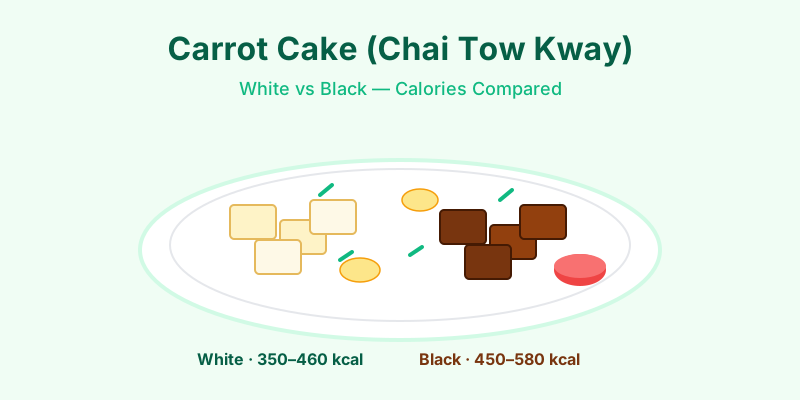
The calorie question splits into two answers, because white and black carrot cake are meaningfully different dishes. On HPB Singapore's reference plate, white carrot cake is 478 kcal (321g plate) and black carrot cake — fried with sweet dark soy sauce — is 606 kcal (331g plate). The gap comes largely from the added sugar in the dark sauce, plus the extra oil needed to caramelise it.
This article breaks down every component of both versions using data aligned with the Health Promotion Board (HPB) Singapore's nutrient database, explains why the two styles diverge, and gives you practical ways to order lighter without giving up the dish.
White vs Black Carrot Cake: What's Actually Different?
Both versions start with the same base — steamed radish cake cut into cubes and pan-fried with egg, garlic, and preserved radish (chye poh). From there, the two diverge:
White Carrot Cake (Chai Tow Kway, "Char Chai Tow Kway" without sauce)
Seasoned simply with fish sauce, white pepper, and sometimes a splash of light soy. The result is a savoury, slightly crispy-edged dish where the radish cake and egg are the stars. Chilli sauce is served on the side rather than mixed in.
Black Carrot Cake ("Char Kway" or "Fried Carrot Cake" with sweet sauce)
Tossed with a generous amount of molasses-based dark soy sauce (tim cheong), which caramelises in the wok and coats the cubes in a sticky, slightly sweet glaze. This sauce is the single biggest calorie and sugar difference between the two versions.
Ingredient Calorie Breakdown
| Ingredient | Typical Amount | White (kcal) | Black (kcal) |
|---|---|---|---|
| Radish cake (rice flour + daikon, steamed) | 200–250g | 160–200 | 160–200 |
| Eggs (whole) | 1–2 large eggs | 70–150 | 70–150 |
| Cooking oil (frying) | 1.5–3 tbsp | 60–120 | 80–140 |
| Preserved radish (chye poh) | 10–15g | 15–20 | 10–15 |
| Garlic (fried) | 5–8g | 10–15 | 10–15 |
| Sweet dark soy sauce (tim cheong) | 2–3 tbsp | — | 90–130 |
| Fish sauce / light soy seasoning | 1–2 tsp | 5–10 | 5–10 |
| Chilli sauce (side, if added) | 1–2 tbsp | 20–40 | 20–40 |
| Total of estimates above | 350–460 kcal (estimate) | 450–580 kcal (estimate) | |
| HPB whole-plate reference | 321g / 331g plate | 478 kcal (321 g plate) | 606 kcal (331 g plate) |
Why Black Carrot Cake Has More Calories
The gap between white and black carrot cake comes down to two ingredients working together. First, the sweet dark soy sauce itself contributes 90 to 130 kcal per typical serving of 2 to 3 tablespoons — almost entirely from sugar and molasses. Second, caramelising that sauce properly requires a slightly hotter wok and marginally more oil to prevent sticking, adding another 20 to 30 kcal on top.
There is also a sodium trade-off worth knowing. White carrot cake leans more heavily on preserved radish and fish sauce for its savoury edge, which pushes sodium up in a different way. Black carrot cake's sauce is sweeter but also contains soy-based sodium, so neither version is meaningfully "better" for blood pressure — the numbers land in a similar range.
How Carrot Cake Compares to Other Hawker Dishes
| Dish | Typical Calories (kcal) | Main Calorie Driver |
|---|---|---|
| Popiah (fresh, 1 roll) | 225 | Vegetables, rice paper |
| Yong tau foo (soup, 6–8 pieces) | 594 | Stuffed items, bee hoon or noodles |
| White carrot cake | 478 | Radish cake, egg, oil |
| Black carrot cake | 606 | Sweet sauce, oil, radish cake |
| Wonton mee (dry) | 625 | Noodles, char siu, oil |
| Oyster omelette (orh luak) | 450–650 | Starch, eggs, lard/oil |
| Char kway teow | 989 | Lard, noodles, dark soy sauce |
Carrot cake — especially the white version — sits comfortably among the lighter cooked hawker dishes, well below noodle-heavy options like char kway teow. It is a reasonable choice for breakfast or a light meal, provided you keep an eye on portion size and oil.
The Sodium Side of Carrot Cake
Preserved radish, fish sauce, and dark soy sauce are all sodium-dense ingredients. A standard plate of carrot cake carries considerably more sodium than most people expect — approximately 1,573mg for white and 1,794mg for black — or roughly 79 to 90% of the HPB's recommended daily limit of 2,000mg. This is easy to overlook because the dish does not taste overtly salty; the chye poh and sauces are balanced by egg and starch.
Tips for Ordering Carrot Cake Lighter
Choose White Over Black
This single swap saves 90 to 130 kcal from the sauce alone. If you enjoy the sweetness, ask for the sauce on the side instead of tossed through, so you control how much you actually eat.
Ask for Less Oil
"Less oil" (少油, shao you) is a completely normal request at most stalls. Cutting oil from 3 tablespoons to 1.5 saves 40 to 60 kcal without changing the flavour meaningfully.
Request Fewer Eggs
Some stalls use up to 2 eggs per plate by default. Asking for a single egg (or none, for an egg-free version some stalls offer) trims 70 to 80 kcal.
Watch the Chilli Sauce
A generous 2-tablespoon serving of chilli sauce adds 40 kcal and meaningful sugar. Dip lightly rather than pouring it over the whole plate.
Log It
Because white and black carrot cake carry noticeably different calorie counts, logging the specific version you ate — not just "carrot cake" — makes a real difference to your daily total. NutriKaki lets you specify white or black so your log matches your plate.
Nutritional Profile at a Glance
| Nutrient | White (per plate) | Black (per plate) |
|---|---|---|
| Calories | 478 kcal (321 g plate) | 606 kcal (331 g plate) |
| Protein | 11.2g | 12.6g |
| Total fat | 23.1g | 26.8g |
| Carbohydrates | 56.2g | 78.0g |
| Sugar | 0.6g | 17g |
| Sodium | ~1,573mg | ~1,794mg |
The sugar row is where the two versions genuinely diverge — black carrot cake carries dramatically more sugar than white (roughly 17g versus under 1g), entirely from the sweet sauce. Sodium, by contrast, stays fairly close between the two.
Is Carrot Cake a Good Choice for Weight Management?
Compared to many wok-fried hawker classics, carrot cake — particularly the white version — is a reasonably moderate option. At 478 kcal (321 g plate), a plate of white carrot cake fits into most meal budgets, and the radish base provides some fibre and volume that noodle dishes generally lack.
Black carrot cake is not a bad choice either, but the added sugar means it is better treated as an occasional order rather than a daily default, particularly if you are also managing blood sugar or watching added sugar intake elsewhere in your day.
Frequently Asked Questions
How many calories are in Singapore fried carrot cake (chai tow kway)?
On HPB Singapore's reference plate, white carrot cake contains 478 calories (321g plate) and black carrot cake (fried with sweet dark soy sauce) contains 606 calories (331g plate). Individual stall plates vary with the amount of oil used, portion size, and how many eggs are added.
Is white or black carrot cake healthier?
White carrot cake is generally lower in calories and sugar because it skips the sweet dark soy sauce used in the black version. However, white carrot cake often relies more heavily on preserved radish (chye poh) for flavour, which adds sodium. Black carrot cake trades some sodium for added sugar from the sauce. Neither is dramatically healthier — the biggest calorie lever in both is the amount of oil used to fry the dish.
What is carrot cake made of in Singapore?
Despite the name, Singapore carrot cake contains no carrots. It is made from a steamed cake of rice flour and white radish (daikon), which is cubed and pan-fried with eggs, preserved radish (chye poh), garlic, and either plain seasoning (white) or sweet dark soy sauce (black).
How can I reduce calories when ordering carrot cake?
Ask for less oil (少油, shao you) and go easy on the chilli sauce, which adds sugar. Choosing white carrot cake over black saves roughly 130 kcal on HPB's reference plates (478 kcal, 321 g plate vs 606 kcal, 331 g plate), mostly from the sweet sauce. Requesting fewer eggs or sharing a plate between two people are also effective ways to cut the calorie load.
Track Carrot Cake with NutriKaki
NutriKaki is built specifically for Singapore hawker food, with calorie and nutrient data aligned to HPB Singapore's database. Search "carrot cake white" or "carrot cake black" to log the right version in seconds — no guessing which generic radish cake entry in a global database actually matches what you ate.
The app covers hundreds of hawker dishes, from carrot cake and oyster omelette to char kway teow and chicken rice. If you are serious about tracking your calories at the hawker centre, it is built on HPB Singapore data for Singapore food.
Download NutriKaki — Free on the App Store Get NutriKaki on Google PlayCalorie and nutrient estimates are based on HPB Singapore data and typical hawker serving sizes. Actual values vary by stall, portion size, and cooking method. This article is for general information only and does not constitute medical or dietary advice. Consult a registered dietitian for personalised guidance. Nutrition data referenced in this article is used under licence from the Health Promotion Board (HPB) of Singapore and may not be redistributed, republished, or reused commercially without NutriKaki's prior written permission.