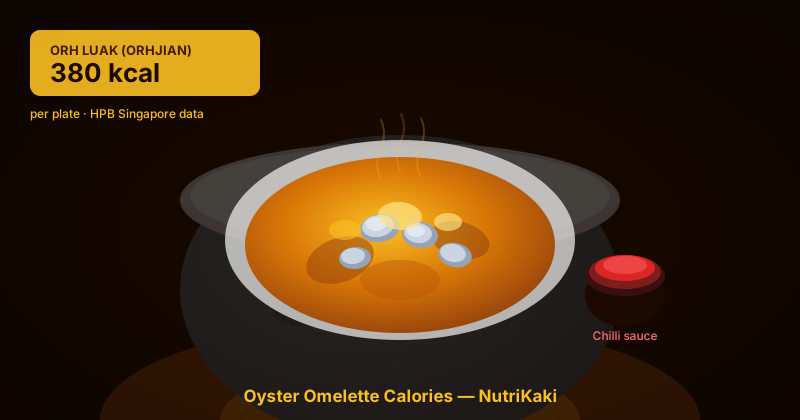
Oyster Omelette Calories Singapore (Orh Luak): The Full Breakdown
Orh luak — or orh jian if you grew up Teochew — is one of those hawker classics that looks deceptively light. A glistening omelette, a handful of oysters, a bright smear of chilli sauce on the side. How bad can it be?
Quite calorie-dense, as it turns out. A standard plate of oyster omelette at a Singapore hawker centre comes in at 450 to 650 kcal, with most stalls landing somewhere in the middle of that range. The calorie count climbs quickly once you account for the sweet potato starch batter, the eggs, and — at traditional stalls — lard in a screaming-hot wok.
HPB Singapore's own database tracks oyster omelette as a single whole-dish entry — 255 kcal per 100g, with a default 100g scoop portion — not broken down by starch, egg, oil, or oyster content. A typical hawker plate is more like 2 to 3 scoops (roughly 200–300g), which puts HPB's own figure at approximately 510–765 kcal, in the same range as the ingredient-level estimate below. This article uses that HPB figure as the anchor and builds an estimated ingredient-by-ingredient breakdown on top of it, so you can see where the calories likely come from — but the individual ingredient numbers are estimates, not a verified HPB breakdown.
What Makes Orh Luak So Calorie-Dense?
Unlike a simple egg omelette, orh luak has three structural layers that each contribute meaningful calories: the starch base, the eggs, and the cooking fat. Understanding each layer helps you see why this dish punches well above its weight visually.
1. The Sweet Potato Starch Batter
The defining texture of orh luak — that crispy outer layer giving way to a gooey, slightly sticky interior — comes entirely from sweet potato starch mixed with water. This starch batter is poured into the wok first and forms the structural foundation of the dish.
A standard serving uses around 40 to 60 grams of sweet potato starch, contributing approximately 100 to 150 kcal of pure carbohydrate. This is starch in its most refined form, with a high glycaemic index — it spikes blood sugar quickly and provides very little fibre or micronutrient value.
Some stalls use a wetter, more gelatinous batter (the Teochew style) while others create a drier, crispier result by frying off more of the moisture. The crispier version may absorb slightly more oil during frying, but the starch calories remain roughly the same.
2. The Eggs
Most hawker stalls crack 3 to 4 eggs per plate of orh luak. Each large egg contributes approximately 70 to 75 kcal, meaning the egg component alone accounts for 210 to 280 kcal per serving. Eggs are the highest-quality protein source in the dish and also provide choline, vitamin D, and B vitamins — but at this quantity, the calorie contribution is substantial.
Some stalls separate the whites and yolks, creating a firmer white base with runnier yolks on top. This is primarily an aesthetic choice; it does not meaningfully change the overall calorie count.
3. Lard and Cooking Oil
This is where many calorie estimates for orh luak go wrong. Traditional stalls — the kind with long queues — fry in lard. A generous glug of lard into a pre-heated wok can represent 2 to 4 tablespoons of pure fat, contributing 100 to 150 kcal of mostly saturated fat to the dish. This fat is what creates the characteristic wok hei aroma and the crispy edges on the starch.
Stalls that have transitioned to vegetable oil (groundnut, sunflower, or palm) use a similar quantity of fat for similar results. The calorie count from oil is nearly identical to lard gram-for-gram, though the saturated fat profile differs.
4. The Oysters
Ironically, the ingredient the dish is named after contributes the least calories. A typical serving includes 6 to 10 oysters, adding only 50 to 70 kcal. Oysters are rich in zinc, iron, vitamin B12, and omega-3 fatty acids, making them the most nutritionally valuable component of the dish per calorie.
5. Chilli Sauce
The sweet chilli sauce served alongside orh luak is often overlooked in calorie counts. A single tablespoon adds around 20 to 30 kcal, mostly from sugar. If you dip generously — two to three tablespoons — that is an easy 60 to 90 kcal addition.
Ingredient Calorie Breakdown (Estimate)
HPB tracks oyster omelette as a single whole-dish entry (255 kcal/100g), not by ingredient. The breakdown below is an estimate built from typical ingredient quantities and their known calorie values — useful for understanding what drives the total, but not itself a verified HPB figure.
| Ingredient | Typical Amount | Calories (kcal, estimate) | Key Nutrients |
|---|---|---|---|
| Sweet potato starch batter | 45–60g dry starch | 100–150 | Carbohydrates (high GI) |
| Eggs (whole) | 3–4 large eggs | 210–280 | Protein, fat, choline |
| Lard or cooking oil | 2–4 tbsp | 100–150 | Saturated fat (lard) / unsaturated fat (oil) |
| Oysters (fresh or frozen) | 6–10 oysters (~80g) | 50–70 | Zinc, B12, iron, omega-3 |
| Spring onion / coriander garnish | 10–15g | 3–5 | Vitamin K, folate |
| Soy sauce / seasoning | 1–2 tsp | 5–10 | Sodium (~600mg) |
| Sweet chilli sauce (side) | 2 tbsp | 40–60 | Sugar, sodium |
| Total (typical plate, estimate) | 450–650 kcal |
Fresh Oysters vs Frozen Oysters: Does It Affect Calories?
Many hawker stalls use frozen oysters, particularly for weekday service when fresh supply is inconsistent. From a calorie perspective, the difference is minimal — both fresh and frozen oysters clock in at roughly 50 to 70 kcal per 80-gram serving.
The nutritional profiles are also largely comparable. Freezing preserves most of the zinc, iron, and omega-3 content in oysters. Where fresh oysters genuinely win is texture and flavour: they are plumper, release more natural brine into the wok, and create a more complex umami base for the dish.
If calorie tracking is your priority, do not spend time worrying about fresh versus frozen. Focus instead on the oil volume and starch thickness — those are where the real calorie differences live between stalls.
How Orh Luak Compares to Other Hawker Dishes
Context matters when evaluating orh luak's calorie count. Here is how it sits against other popular hawker dishes, using typical serving sizes at Singapore hawker centres.
| Dish | Typical Calories (kcal) | Main Calorie Driver |
|---|---|---|
| Chicken rice (steamed, HPB default plate) | 488 | Rice, chicken skin, chilli oil |
| Yong tau foo (soup, 6–8 pieces) | 280–380 | Stuffed items, bee hoon or noodles |
| Wonton mee (dry) | 625 | Noodles, char siu, oil |
| Orh luak (oyster omelette) | 450–650 | Starch, eggs, lard/oil |
| Laksa | 429 | Coconut milk, noodles, gravy |
| Nasi lemak (full set) | 831 | Coconut rice, fried chicken, sambal |
| Char kway teow | 989 | Lard, noodles, dark soy sauce |
| Mee rebus | 729 | Thick gravy, potatoes, noodles |
Orh luak lands in the middle of the hawker spectrum — heavier than lighter dishes like yong tau foo and wonton mee, but lighter than nasi lemak and char kway teow. At 450 to 650 kcal, it is a reasonable occasional meal, though it is harder to justify as a daily staple if you are managing weight.
The Sodium Problem
Beyond calories, orh luak carries a meaningful sodium load. Soy sauce, the oysters themselves (naturally briny), and the chilli sauce all contribute. A standard serving can contain 800 to 1,100mg of sodium — roughly 35 to 48% of the HPB's recommended daily limit of 2,300mg. Pair it with a bowl of soup and a sugary drink and you have likely hit your sodium ceiling for the day.
Tips for Reducing Calories When Ordering Orh Luak
You do not have to skip orh luak to stay on track. These practical adjustments can bring the calorie count closer to the lower end of the range without sacrificing the experience.
Ask for Less Oil
The simplest and most effective lever. Politely asking the hawker for "less oil" (少油, shao you) is normal in Singapore. Even a modest reduction — from 4 tablespoons to 2 — saves 60 to 100 kcal without noticeably changing the flavour profile.
Request a Lighter Starch Base
Some stalls will adjust the batter ratio on request, creating a thinner, less gelatinous base. This saves 30 to 50 kcal and also results in a crispier omelette that many people actually prefer.
Go Easy on the Chilli Sauce
Use one tablespoon instead of three. This is a small saving (40 to 60 kcal) but requires no interaction with the hawker and takes seconds to implement.
Share the Plate
Orh luak is well-suited to sharing. Split one plate between two people, then add a lower-calorie dish — a plate of stir-fried kai lan or a bowl of clear soup — to round out the meal. You each get the flavour hit at roughly half the calories.
Choose Your Accompaniment Wisely
Avoid pairing orh luak with fried rice or noodles. It is a standalone dish that pairs well with plain rice (180 kcal per bowl) or without any carb accompaniment at all. If you are eating it as the centrepiece, a vegetable side keeps the total meal under 650 kcal.
Log It
The biggest mistake people make is underestimating portion size. What looks like a small plate of eggs is often 500 to 600 kcal. Logging your meal with NutriKaki gives you a number and helps you adjust the rest of your day accordingly.
Nutritional Profile at a Glance (Estimate)
| Nutrient | Lower Estimate (450 kcal) | Higher Estimate (650 kcal) |
|---|---|---|
| Calories | 450 kcal | 650 kcal |
| Protein | 15g | 25g |
| Total fat | 25g | 40g |
| Saturated fat | 8g | 16g |
| Carbohydrates | 35g | 55g |
| Dietary fibre | <1g | <2g |
| Sodium | ~800mg | ~1,100mg |
One thing stands out in this table: the fibre content is negligible. Sweet potato starch, refined eggs, and oysters provide almost no dietary fibre. If orh luak is your main meal, pair it with a vegetable dish to bring some fibre into the equation.
Is Orh Luak Worth the Calories?
That depends on where it sits in your day. At 450 to 650 kcal, orh luak is a substantial meal on its own. If you are following a 1,600 to 1,800 kcal daily target, a single plate of orh luak represents 25 to 40% of your entire day's budget.
That said, it is not the worst choice in the hawker centre. The oysters bring genuine nutritional value — zinc for immune function, vitamin B12 for nerve health, and iron for energy. The eggs are among the most nutrient-dense foods available at any price point. The problem is not the ingredients themselves but the volume of oil and starch that the dish requires to achieve its characteristic texture.
Enjoyed once or twice a week as part of a varied diet, orh luak is a perfectly reasonable choice. The key is knowing its calorie weight and planning your other meals accordingly.
Frequently Asked Questions
How many calories are in oyster omelette (orh luak) in Singapore?
A standard hawker plate of orh luak in Singapore contains approximately 450 to 650 calories. The wide range comes from how much lard or oil is used, the size of the starch base, and the number of eggs. Stalls that use fresh oysters and less starch tend to sit at the lower end, while generous portions fried with lard hit the upper range.
Why is orh luak so high in calories?
Orh luak is calorie-dense for three main reasons, though HPB tracks the dish as a single 255-kcal-per-100g entry rather than by ingredient, so the following is an estimated breakdown, not a verified HPB split. First, the sweet potato starch batter adds an estimated 100 to 150 kcal. Second, most stalls use 3 to 4 eggs per plate, contributing an estimated 210 to 280 kcal. Third, orh luak is traditionally fried with lard in a very hot wok, absorbing an estimated 100 to 150 kcal of fat per serving.
Is orh luak or orh jian the same dish?
Yes. Orh luak and orh jian both refer to the same dish — oyster omelette. Orh luak is Hokkien and orh jian is Teochew. The dish is identical: oysters cooked in a sweet potato starch batter with eggs, typically garnished with coriander and served with chilli sauce. The calorie count is the same regardless of which dialect name is used.
Do fresh oysters have fewer calories than frozen oysters in orh luak?
The difference is modest. Fresh oysters and frozen oysters are nutritionally similar — both contribute around 50 to 70 kcal per 6 to 8 oysters. Fresh oysters tend to be plumper and more flavourful, but the calorie gap is minimal. The bigger calorie variables are the amount of starch, oil, and number of eggs used.
How can I reduce calories when ordering orh luak?
Ask the hawker to use less oil and avoid or reduce the lard. Request a lighter starch base — some stalls can adjust the batter thickness. Skip or use minimal chilli sauce, which adds 20 to 40 kcal per tablespoon. Pair orh luak with a vegetable dish rather than rice to keep your meal balanced. Using NutriKaki to log your meal helps you stay within your daily targets.
Track Orh Luak with NutriKaki
NutriKaki is built specifically for Singapore hawker food, with calorie and nutrient data aligned to HPB Singapore's database. Search "oyster omelette" or "orh luak" to log your meal in seconds — no hunting through generic databases that list American oyster dishes with completely different calorie counts.
The app covers hundreds of hawker dishes, from orh luak and char kway teow to nasi lemak and bak chor mee. If you are serious about tracking your calories at the hawker centre, it is built on HPB Singapore data for Singapore food.
Download NutriKaki — Free on the App Store Get NutriKaki on Google PlayCalorie and nutrient estimates are based on HPB Singapore data and typical hawker serving sizes. Actual values vary by stall, portion size, and cooking method. This article is for general information only and does not constitute medical or dietary advice. Consult a registered dietitian for personalised guidance. Nutrition data referenced in this article is used under licence from the Health Promotion Board (HPB) of Singapore and may not be redistributed, republished, or reused commercially without NutriKaki's prior written permission.