Mee Soto vs Mee Rebus vs Mee Siam: Calories, Protein and Sodium Compared
Walk up to any Malay noodle stall in Singapore and you're usually choosing between three things: mee soto, mee rebus, and mee siam. Same stall, same price range, same auntie. Most people pick by mood.
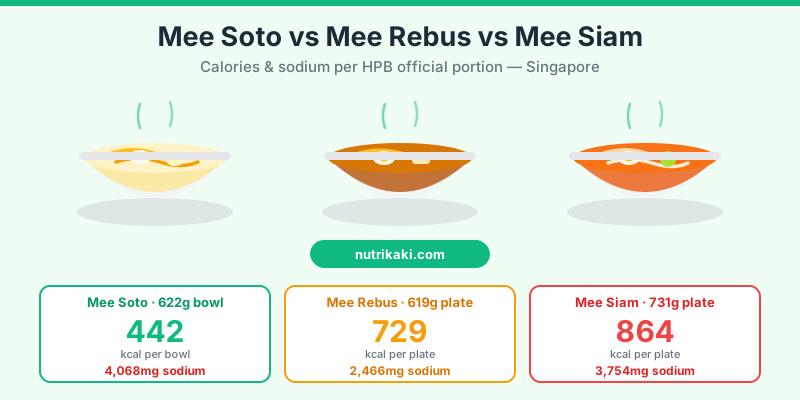
Here's the direct answer, using the Health Promotion Board's official portion weights: one 622g bowl of mee soto is about 442 kcal, one 619g plate of mee rebus is about 729 kcal, and one 731g plate of mee siam is about 864 kcal. Mee siam is very nearly double the mee soto.
But calories aren't the whole story here, and this is where almost every other guide stops. The lightest dish of the three is also, by a clear margin, the saltiest — one bowl of mee soto carries more sodium than a plate of mee siam. If you're watching blood pressure rather than weight, the ranking flips completely.
The Numbers at a Glance
Every figure below is for one whole serving at HPB's official default portion weight, which is stated in the first column. These are not per-100g figures.
| Dish (HPB official portion) | Calories | Protein | Fat | Sodium |
|---|---|---|---|---|
| Mee soto — 1 bowl, 622g | ~442 kcal | ~21g | ~5g | ~4,068mg |
| Dry / fried mee siam — 1 plate, 343g | ~597 kcal | ~16g | ~24g | ~1,837mg |
| Mee rebus — 1 plate, 619g | ~729 kcal | ~26g | ~25g | ~2,466mg |
| Mee siam (wet) — 1 plate, 731g | ~864 kcal | ~23g | ~31g | ~3,754mg |
The Sodium Twist Nobody Mentions
Mee soto gets recommended constantly as the "light" Malay breakfast, and on calories that's fair. The problem is that its lightness comes from being mostly broth — and that broth is where the salt lives.
| Dish (whole serving) | Sodium | % of 2,000mg daily limit |
|---|---|---|
| Mee soto — 1 bowl, 622g | ~4,068mg | ~203% |
| Mee siam — 1 plate, 731g | ~3,754mg | ~188% |
| Mee rebus — 1 plate, 619g | ~2,466mg | ~123% |
| Dry / fried mee siam — 1 plate, 343g | ~1,837mg | ~92% |
Why Dry Mee Siam Looks "Lighter" (It Isn't)
This one trips people up constantly, and it's worth being precise about.
Dry mee siam comes in at 597 kcal for its 343g plate, while wet mee siam is 864 kcal for its 731g plate. So per serving, dry genuinely is lower — by a lot.
But that is a portion-size difference, not a lighter dish. Measured on the same basis, dry mee siam is the denser food: 177 kcal per 100g versus 119 kcal per 100g for wet mee siam. HPB simply records the dry version as a much smaller plate, because that's how it's actually served.
Per 100g — For Anyone Weighing Their Food
If you're logging by weight rather than by plate, these are the underlying HPB per-100g values that every figure above is derived from.
| Dish | kcal /100g | Protein | Fat | Carbs | Sodium |
|---|---|---|---|---|---|
| Mee soto | 71 | 3.3g | 0.9g | 12.5g | 654mg |
| Mee rebus | 118 | 4.3g | 4.1g | 16.1g | 399mg |
| Mee siam (wet) | 119 | 3.2g | 4.2g | 17.1g | 517mg |
| Dry / fried mee siam | 177 | 4.8g | 7.2g | 23.3g | 545mg |
The Gravy, Counted Separately
HPB lists mee siam gravy and mee rebus gravy as their own entries, measured as a standalone side serving. These figures are useful for understanding where the calories in your plate are concentrated — but note that the gravy is already included in the whole-plate figures higher up this page. Do not add these on top.
| Gravy (standalone side serving) | Calories | Sugar | Sodium |
|---|---|---|---|
| Mee rebus gravy — 1 bowl, 340g | ~337 kcal | ~7g | ~1,588mg |
| Mee siam gravy — 1 bowl, 359g | ~280 kcal | ~25g | ~2,495mg |
That mee siam gravy sugar figure is the one worth pausing on: roughly 25g of sugar in a standalone bowl of gravy, which is most of a day's added-sugar allowance from a condiment. It's the tangy-sweet asam base doing that.
How to Order Smarter at the Malay Noodle Stall
How These Compare to Other Hawker Dishes
All figures below are per whole serving at HPB's official portion weight.
| Dish (whole serving) | Calories | Verdict |
|---|---|---|
| Mee soto — 1 bowl, 622g | ~442 kcal | ✅ Light — but very high sodium |
| Dry / fried mee siam — 1 plate, 343g | ~597 kcal | 👍 Reasonable, lowest salt here |
| Mee rebus — 1 plate, 619g | ~729 kcal | 👍 Middle of the pack |
| Mee siam (wet) — 1 plate, 731g | ~864 kcal | ⚠️ Heaviest of the three |
| Char kway teow — 1 plate | ~989 kcal (480 g plate) | ❌ Occasional treat only |
Frequently Asked Questions
One bowl of mee soto is approximately 442 calories, based on HPB's official default portion of 622g. On a per-100g basis mee soto is 71 kcal. It is the lowest-calorie of the three main Malay hawker noodle dishes — but it also carries the most sodium, at roughly 4,068mg per bowl.
Mee rebus is the lighter of the two. One 619g plate of mee rebus is approximately 729 calories, while one 731g plate of mee siam is approximately 864 calories. Mee rebus also has less sodium — about 2,466mg per plate versus 3,754mg for mee siam. Both are per whole plate using HPB's official portion weights.
On calories, yes — approximately 442 kcal per 622g bowl, and very low in fat at around 5g. On salt, no: one bowl is roughly 4,068mg of sodium, about 203% of the 2,000mg daily limit HPB recommends. Leaving most of the broth is the single most useful change you can make.
Per serving, yes. HPB records dry (fried) mee siam at 597 calories for its 343g plate, versus 864 calories for wet mee siam's 731g plate. But that's a portion-size effect, not a lighter dish — per 100g, dry mee siam is denser at 177 kcal versus 119 kcal. The dry plate is simply much smaller.
Per HPB's official portions: mee rebus about 26g per 619g plate, mee siam about 23g per 731g plate, and mee soto about 21g per 622g bowl. All three are moderate rather than high-protein for their calorie cost, so a side of tahu goreng or an extra egg is worthwhile if you're tracking protein.
One 731g plate of mee siam contains approximately 3,754mg of sodium — roughly 188% of the 2,000mg daily limit recommended by Singapore's Health Promotion Board. On a per-100g basis mee siam is 517mg. Asking for less gravy is the most effective way to bring it down.
Nutrition data sourced from the Health Promotion Board (HPB) Singapore food composition database. Values are approximate and vary by stall, portion, and cooking method. This article is for general wellness purposes only and does not constitute medical or dietary advice. Nutrition data referenced in this article is used under licence from the Health Promotion Board (HPB) of Singapore and may not be redistributed, republished, or reused commercially without NutriKaki's prior written permission.