Nasi Padang Calories: Every Dish Broken Down (Singapore Guide)
Walk past any nasi padang stall in Singapore and you'll see the same thing: a glass display packed with 20 to 30 dishes, all begging to be pointed at. Rendang glistening in dark gravy, golden fried chicken, green sayur lodeh, red sambal everything. It's one of the most flavourful — and most unpredictable — meals on the hawker trail.
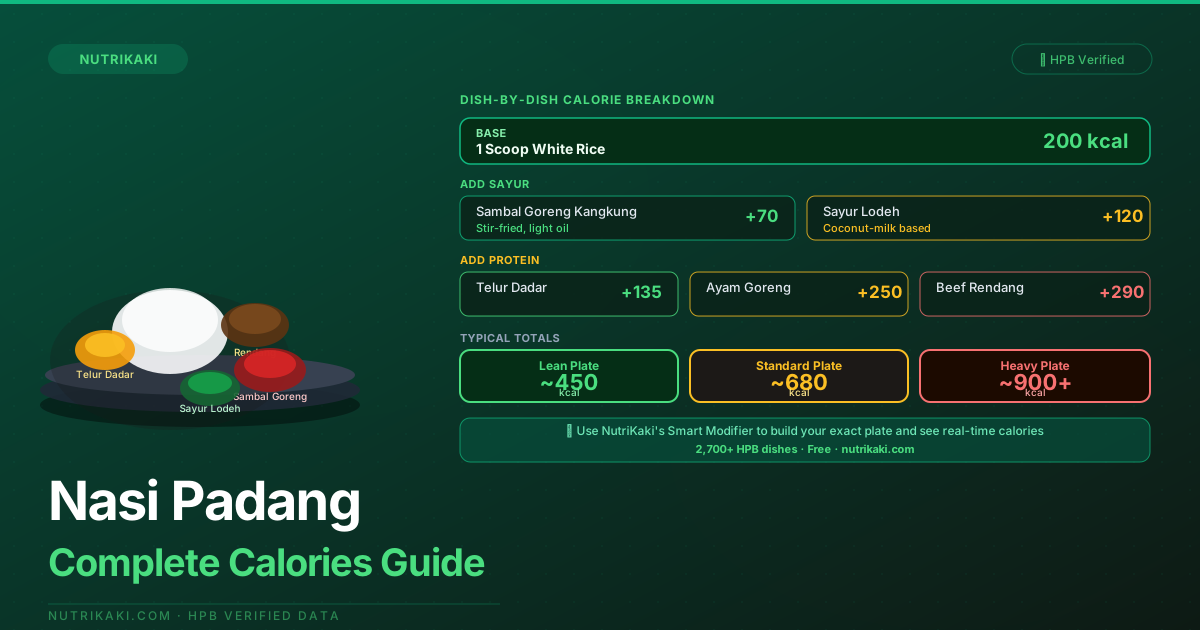
That unpredictability is the problem for anyone trying to track calories. Nasi padang isn't a fixed dish like chicken rice or laksa. It's assembled dish by dish, and depending on what you point at, the same plate of rice can leave the stall at 420 kcal or well over 900 kcal. A 2019 Straits Times report citing HPB found a typical nasi padang plate runs 700 to 900 calories — with healthier versions built to land closer to 400.
This guide breaks nasi padang down dish by dish, using typical Singapore hawker portions, so you can build a plate you actually enjoy without blowing your calorie budget for the day.
What Goes Into the Calorie Count
A nasi padang plate has four components that stack up fast:
- Rice — the base, usually a standard scoop
- Sayur (vegetable dishes) — often coconut-milk based, so not always "light"
- Protein dishes — the single biggest variable, ranging from grilled to deep-fried in santan
- Sambal and kuah (gravy) — ladled on generously, and easy to underestimate
The Three Plate Types
Rice: The Base Everyone Underestimates
| Rice Option | Calories | Notes |
|---|---|---|
| Half scoop white rice | ~130 kcal | ✅ Best for calorie control |
| 1 scoop white rice (standard) | 260 kcal (200 g bowl) | The default portion most stalls serve |
| 1.5 scoops white rice | ~280–320 kcal | ⚠️ Common when the plate looks "too empty" |
| Lontong (compressed rice cake) | ~150–170 kcal | Common alternative, similar calorie range |
Sayur (Vegetable Dishes): Not Always "Light"
This is where nasi padang catches people off guard. Many sayur dishes are cooked in santan (coconut milk), which means "vegetable" doesn't automatically mean "low calorie."
| Sayur Dish | Calories (1 portion) | Notes |
|---|---|---|
| Timun (cucumber) acar | ~15–25 kcal | ✅ Practically free, refreshing |
| Sambal goreng pucuk paku / kangkung | ~60–90 kcal | ✅ Stir-fried, light oil |
| Terong balado (chilli eggplant) | ~90–120 kcal | 👍 Moderate, oil-fried before saucing |
| Sayur lodeh (vegetable coconut curry) | ~100–140 kcal | ⚠️ Santan-based, moderate fat |
| Sambal goreng jering / petai | ~110–150 kcal | ⚠️ Rich, oil-heavy preparation |
Protein Dishes: The Biggest Variable on Your Plate
| Protein Dish | Calories (1 portion) | Notes |
|---|---|---|
| Telur dadar (Indonesian omelette, 1 slice) | ~120–150 kcal | ✅ Filling, moderate protein |
| Ayam bakar / ayam panggang (grilled chicken) | ~180–220 kcal | ✅ Leaner than fried options |
| Tahu goreng (fried tofu) | ~70–90 kcal | 👍 Small piece, good protein-to-calorie ratio |
| Tempe goreng (fried tempeh) | ~90–120 kcal | 👍 Plant protein, moderate oil |
| Telur balado (egg in chilli sauce) | ~140–170 kcal | 👍 Whole egg plus oil-based sambal |
| Ayam goreng / ayam penyet (fried chicken) | ~220–280 kcal | ⚠️ Deep fried, batter adds fat |
| Sotong goreng tepung (battered fried squid) | ~160–200 kcal | ⚠️ Batter absorbs oil |
| Beef rendang | 223 kcal (100 g serving) | ❌ Slow-cooked in coconut milk, high fat |
| Paru goreng (fried beef lung) | 246 kcal (100 g serving) | ❌ Deep fried and dense |
| Otak / babat (offal in curry) | ~220–270 kcal | ❌ Rich curry base, higher fat organ meat |
Sambal and Kuah: The Silent Calorie Adder
Just like the gravy at a cai png stall, the kuah at a nasi padang stall is often ladled on automatically — and it's made from the concentrated cooking liquid of the richest dishes on display, meaning it carries both calories and a lot of sodium.
| Sauce / Gravy | Approx. Calories | Sodium |
|---|---|---|
| No added kuah (dry plate) | 0 kcal | ✅ Lowest sodium |
| Sambal (1 small spoon) | ~30–50 kcal | ⚠️ High sodium, mostly chilli oil |
| Light kuah drizzle | ~50–80 kcal | ❌ Very high sodium |
| Extra santan-based kuah (1 ladle) | ~100–150 kcal | ❌ High fat and sodium |
How to Build a Smart Nasi Padang Plate
Nasi Padang vs Other Common Hawker Lunches
| Dish | Approx. Calories | Verdict |
|---|---|---|
| Lean nasi padang (½ rice, sayur, telur dadar, kuah on side) | ~420–480 kcal | ✅ Excellent |
| Chicken rice (steamed) | 488 kcal (346 g plate) | ✅ Great |
| Standard nasi padang (rice, 1 sayur, ayam goreng) | ~650–700 kcal | 👍 Good, watch the extras |
| Cai png (full rice, 1 veg, 1 braised protein) | ~420–480 kcal | 👍 Good |
| Nasi lemak (with fried chicken and sambal) | 831 kcal (410 g plate) | ⚠️ Moderate to heavy |
| Heavy nasi padang (rice, rendang, fried side, extra kuah) | ~900–1,000 kcal | ⚠️ Heavy |
| Char kway teow | 989 kcal (480 g plate) | ❌ Treat only |
Track Your Nasi Padang with NutriKaki
The challenge with nasi padang is the same one that makes it delicious: no two plates are the same. Most calorie apps only let you log a single fixed "nasi padang" entry, which is close to useless when your plate could be 450 kcal or 950 kcal depending on what you pointed at.
NutriKaki lets you log dish by dish — rice, sayur, protein, sambal — using Singapore hawker food data, so your log actually reflects what's on your plate. It takes about 30 seconds, and over a week that detail is the difference between understanding your intake and just guessing.
Frequently Asked Questions
A typical nasi padang plate with rice, one vegetable dish and one meat dish ranges from 600 to 750 calories. A lean plate built around rice, sayur, and a lean protein like telur dadar can come in around 420 to 480 kcal. A heavy plate with rice, rendang, fried chicken and extra gravy can exceed 900 kcal.
Paru goreng (fried beef lung) is typically the highest of the dishes with a direct HPB entry, at about 246 kcal per serving using HPB's standard 100g scoop. Beef rendang is lower than many expect, at about 223 kcal per serving using the same HPB 100g scoop, though both are cooked in coconut milk and oil for a long time. Fried items in general — ayam goreng, sotong goreng tepung, tempe goreng — are also calorie-dense, though HPB does not test those specific preparations separately.
It can be, if you choose carefully. A plate built from rice, sayur lodeh or terong balado, and a grilled or steamed protein like ayam bakar or telur dadar keeps you under 500 kcal with plenty of vegetables. The same stall also serves some of the richest, most calorie-dense hawker food in Singapore if you pick fried and coconut-milk-heavy dishes.
One standard scoop of white rice at a nasi padang stall is approximately 260 kcal (200 g bowl), similar to other hawker rice portions. Asking for less rice or a smaller scoop can save about 130 kcal.
Watch out for rendang, paru goreng, and extra ladles of kuah (gravy) or santan (coconut milk sauce) — these are the biggest calorie contributors. Choosing one vegetable dish, one grilled or braised protein, and asking for gravy on the side rather than poured over the rice makes the biggest difference.
Nutrition data referenced from the Health Promotion Board (HPB) Singapore food composition database and typical hawker preparation methods. Calorie values are approximate and vary by stall, portion size, oil usage, and cooking method. This article is for general wellness information only and does not constitute medical or dietary advice. Consult a registered dietitian for personalised nutrition guidance. Nutrition data referenced in this article is used under licence from the Health Promotion Board (HPB) of Singapore and may not be redistributed, republished, or reused commercially without NutriKaki's prior written permission.