Popiah Calories Singapore: How Healthy Is It?
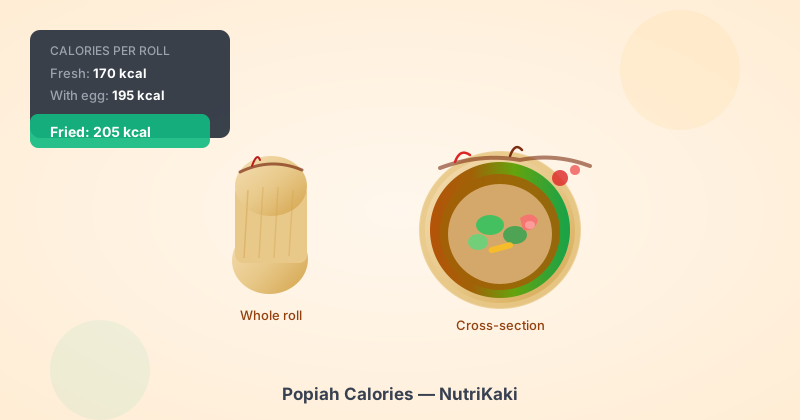
Popiah is one of those rare hawker foods in Singapore that feels indulgent but is actually one of the more calorie-friendly options you can pick. A fresh popiah roll packed with braised turnip, tofu, egg, and prawns clocks in at around 225 calories, based on HPB's standard 191g roll — noticeably lower than a curry puff, and less than half a plate of fried carrot cake.
But like most hawker food, the exact calorie count depends on what goes into the roll and how generous the uncle or auntie is with the pork lard and sweet sauce. This guide breaks it all down using Health Promotion Board (HPB) Singapore data, so you know exactly what you're eating whether you grab one roll or two.
Fresh Popiah vs Fried Popiah: Calorie Comparison
Most popiah stalls in Singapore offer both fresh and fried versions. The fresh popiah uses a thin, soft wheat skin rolled up with the filling. The fried popiah (sometimes called spring roll) uses a similar filling but is wrapped in a thicker pastry skin and deep-fried until golden and crispy.
Thin wheat skin, braised filling
~290 kcal for a 100g roll · 290 kcal/100g
Fried: 450–580 kcal
| Type | Per Roll (kcal) | 2 Rolls (kcal) | Protein (g) | Fat (g) | Carbs (g) |
|---|---|---|---|---|---|
| Fresh popiah (standard) | 225 | 450 | 6–9 | 4–8 | 33 |
| Fresh popiah (no lard) | 180–190 | 360–380 | 6–9 | 2–4 | 33 |
| Fried popiah (spring roll, HPB 78g piece) | 226 | 452 | 3.0 | 11.0 | 28.6 |
| Fried popiah (larger ~100g roll) | 290 | 580 | 3.9 | 14.1 | 36.6 |
Gram for gram, fried popiah has more calories because the pastry skin soaks up oil during deep frying — the filling itself is similar, mostly braised turnip (bangkwang), which is very low in calories. In practice, fried rolls are usually sold smaller than fresh ones (about 100g versus HPB's fuller 191g fresh reference roll), which is why the per-roll totals above end up in a similar range. If you're comparing rolls of the same size, fresh is still the lower-oil pick.
What's Inside: Popiah Ingredients and Their Calories
A traditional Singapore popiah is an assembly of many components layered together. Understanding each ingredient helps you see where the calories come from — and where you have room to customise.
| Ingredient | Typical Amount | Calories (kcal) | Notes |
|---|---|---|---|
| Wheat popiah skin | 1 sheet (~30g) | 60–70 | Thin, soft; relatively low calorie |
| Braised turnip / bangkwang | 60–80g | 30–45 | Main filling; very low calorie, high fibre |
| Bean sprouts | 20g | 8–10 | Almost negligible calories |
| Tofu (firm, braised) | 20–30g | 18–25 | Good protein source, low fat |
| Egg (omelette strips) | 15–20g | 22–30 | Adds protein; cooked in thin sheet |
| Prawns (small, cooked) | 2–3 pieces (~15g) | 15–20 | Lean protein, low fat |
| Lettuce leaf | 1 leaf (~10g) | 2–3 | Negligible; adds crunch and freshness |
| Pork lard (rendered fat bits) | 1 tsp (~5g) | 35–45 | Biggest single calorie driver per gram |
| Hoisin / sweet flour sauce | 1–2 tsp (~10g) | 25–35 | High in sugar; adds significant calories |
| Chilli sauce | 1 tsp (~5g) | 8–12 | Low calorie; use freely |
| Crushed peanuts / peanut powder | 1 tsp (~5g) | 28–32 | Adds flavour and fat; optional at many stalls |
When you add it all up, the filling itself — turnip, bean sprouts, tofu, egg, and prawns — contributes only around 95 to 130 calories. The wheat skin adds another 60 to 70 calories. The swing in total calories largely comes from how heavy-handed the stall is with pork lard and sweet sauce.
Why Popiah Is Actually One of the Better Hawker Options
Singapore hawker food has a reputation for being calorie-dense, and many dishes live up to that reputation. But popiah is genuinely an outlier. Here is why:
The main filling is turnip (bangkwang). Jicama or yam bean, as it's also known, is almost entirely water and fibre. A full 80g serving of braised turnip contributes only around 35 to 45 calories. For comparison, 80g of white rice contributes around 115 calories. Popiah packs a lot of volume and chewing satisfaction per calorie, which helps you feel full.
It's not fried. Fresh popiah is assembled cold and eaten immediately. There's no wok, no deep fryer, and no stir-frying in a pool of oil. The cooking that does happen — braising the turnip filling — is done with relatively little fat.
It's naturally portion-controlled. Each roll is a defined unit. Unlike cai png where it's easy to lose track of how much you've taken, popiah is one roll at a time. Eating two rolls and stopping is psychologically easy in a way that scooping rice is not.
It contains real protein. Between the egg, tofu, and prawns, a standard popiah roll delivers 6 to 9 grams of protein — enough to contribute meaningfully to satiety despite the low calorie count.
Popiah vs Other Hawker Snacks: How Does It Stack Up?
Popiah looks even better when you compare it side by side with what else is available at a typical hawker centre or food court snack stall.
| Hawker Snack | Serving Size | Calories (kcal) | vs Fresh Popiah |
|---|---|---|---|
| Fresh popiah (1 roll) | 1 roll (~191g) | 225 | — |
| Fresh popiah (2 rolls) | 2 rolls (~382g) | 450 | — |
| Fried popiah / spring roll | 1 piece (78g HPB ref) to ~100g roll | 226–290 | +1 to +65 kcal |
| Curry puff (baked, estimate*) | 1 piece (~100g) | 250–300 | +25–75 kcal |
| Curry puff (fried) | 1 piece (~100g) | 290–340 | +65–115 kcal |
| Fried carrot cake (white) | 1 plate (~321g) | 478 | +253 kcal |
| Fried carrot cake (black) | 1 plate (~331g) | 606 | +381 kcal |
| Wonton / dumpling (fried) | 4 pieces (~80g) | 200–280 | -25 to +55 kcal |
| Prawn fritters / hae zhor | 3 pieces (~90g) | 250–320 | +25–95 kcal |
| Ngoh hiang (5-spice roll) | 2 pieces (~80g) | 220–280 | -5 to +55 kcal |
| Kueh pie tee (top hats) | 4 pieces (~80g) | 140–180 | -85 to -45 kcal |
Against the heaviest fried snacks at a hawker centre — fried carrot cake and curry puff — fresh popiah is the clear winner on calories. Compared to lighter bites like kueh pie tee, a fresh popiah roll (225 kcal, based on HPB's fuller 191g reference roll) runs a bit higher, simply because it's a bigger roll. Pound for pound, popiah's turnip-based filling is still one of the leaner options on the table.
*HPB does not carry a separate baked curry puff entry — only deep-fried curry puff is a verified reference. The baked figure above is an unverified estimate for stalls that offer an oven-baked version.
One Roll vs Two Rolls: What's the Right Amount?
Most popiah stalls sell individual rolls, and many people wonder whether one is enough or two is too many. Here's the practical reality:
One roll as a snack: At around 225 kcal (HPB's 191g reference roll), one fresh popiah makes for a perfectly sized mid-morning or mid-afternoon snack. It's filling enough to hold you over but light enough not to spoil your next meal.
Two rolls as a light meal: At around 450 kcal, two rolls can work as a light lunch, especially if you pair them with a sugar-free drink. It won't replace a full hawker meal for most people in terms of satiety, but it is a genuinely reasonable option if you're trying to keep calories in check at lunchtime.
Two rolls plus a side: Some people order two popiah rolls alongside a bowl of clear soup or a small serving of economy rice with just one vegetable dish. This kind of combination can give you a complete, satisfying meal in the 600–700 kcal range — respectable for lunch.
Tips for Ordering Popiah Without Wrecking Your Calories
The good news is that popiah is already calorie-friendly. A few small ordering tweaks can make it even better without sacrificing flavour:
Ask for less pork lard (or none). Many stalls will honour this request. Skipping the lard entirely saves 35–45 kcal per roll. Some stalls offer fried shallots as an alternative garnish, which add crunch at a lower calorie cost.
Go easy on the sweet sauce. The dark hoisin or sweet flour sauce is brushed or drizzled onto the skin before rolling. Ask for "less sauce" and you save another 15–25 kcal per roll. The chilli sauce, by contrast, is very low in calories — use as much as you like.
Fresh vs fried isn't just about calories — it's about size and oil. Gram for gram, fried popiah has more calories because the pastry skin absorbs oil during frying, and stalls typically serve fried rolls smaller than fresh ones — so a small 78g fried piece lands near a full 191g fresh roll, while a larger 100g fried roll (about 290 kcal) overtakes it. If you want the lower-oil option regardless of size, fresh is still the pick — and it lets you taste the individual ingredients more clearly, from the sweetness of the braised turnip to the freshness of the bean sprouts.
Check if peanut powder is added. Some stalls sprinkle crushed peanuts or peanut powder over the filling. This is delicious but adds around 28–32 kcal per roll. If you're counting carefully, it's worth asking about.
Eat it fresh. Popiah doesn't hold well. The skin softens and becomes soggy within 30 minutes of being made. Always eat it immediately for the best texture — and because waiting often leads to ordering an extra one while you're at the stall anyway.
The History and Culture of Popiah in Singapore
Popiah has deep Hokkien and Teochew roots, brought to Singapore by early Chinese immigrants from Fujian and Chaozhou. The dish — which literally means "thin pancake" in Hokkien — was traditionally made to celebrate the arrival of spring (li chun), using fresh seasonal vegetables.
In Singapore, popiah evolved into its own distinct version. The filling is centred on braised jicama (bangkwang), which grows abundantly in Southeast Asia and is far more readily available here than the traditional spring vegetables of southern China. The addition of prawns and the use of hoisin sauce are local adaptations that have become standard.
Today, popiah is sold at hawker centres, food courts, and even upscale restaurants across Singapore. Some Peranakan restaurants serve a more elaborate version with additional ingredients like crab meat or dried shrimp, which can push the calorie count higher. The hawker centre version remains the most common — and is the basis for the calorie figures in this guide.
Frequently Asked Questions
One fresh popiah roll in Singapore contains approximately 225 calories, based on HPB's standard 191g roll (smaller rolls at some stalls can run lower, closer to 150 to 195 calories). A fried popiah roll is denser: HPB's fried spring roll entry is 290 kcal per 100g, so its 78g reference piece is about 226 calories and a larger 100g fried roll is about 290 calories.
Fresh popiah is one of the healthier hawker snacks in Singapore. The turnip and vegetable filling is nutritious and high in fibre, and the thin wheat skin is relatively low in calories. The main calorie contributors are pork lard and hoisin or sweet sauce. Asking for less lard and less sauce can reduce each roll by 20 to 40 calories.
A standard two-roll serving of fresh popiah, based on HPB's reference roll size, is approximately 450 calories in total. A two-roll serving of fried popiah is approximately 450 to 580 calories. This makes even a two-roll serving competitive calorie-wise with many other hawker snacks.
Gram for gram, fried popiah has more calories than fresh because the pastry skin absorbs oil during deep frying. Fresh popiah is 118 kcal per 100g; HPB's fried spring roll is 290 kcal per 100g — roughly two and a half times as dense. Fried rolls are usually sold smaller, so a 78g fried piece (226 kcal) lands close to a 191g fresh roll (225 kcal). But a larger 100g fried roll is about 290 kcal, above the fresh roll despite being barely half its weight.
One fresh popiah roll at around 225 kcal (HPB's 191g reference roll) is still lower than a curry puff (290 to 340 kcal) or a plate of fried carrot cake (478 to 606 kcal), though a fried spring roll is comparable per piece (226 kcal for HPB's 78g reference piece) and higher for a larger 100g roll (about 290 kcal). It remains one of the better lower-calorie choices at a Singapore hawker centre, especially next to deep-fried options.
Track Popiah Calories with NutriKaki
NutriKaki is a Singapore hawker food calorie tracking app built on HPB data. It includes fresh popiah, fried popiah, and common hawker snacks — already entered in the database so you don't have to guess or search. Tap the item, adjust the quantity, and your log is done in seconds.
Download it free for iPhone or Android:
Download NutriKaki — App Store (iPhone) Download NutriKaki — Google Play (Android)