Pulled Pork Burger vs Burrito: Which Actually Costs You More?
Same shredded pork, two very different carriers. One comes stacked in a bun with barbecue sauce. The other comes rolled in a Mexican-style flour tortilla. Both feel like a similarly hearty, similarly "Western" choice — but do they actually cost you the same?
Using HPB Singapore's food composition data, we compared pulled pork burger against pulled pork burrito head-to-head. The short answer: the burrito comes out lighter on calories and dramatically lower in sugar — but it's not a clean win across every number. Here's the full breakdown.
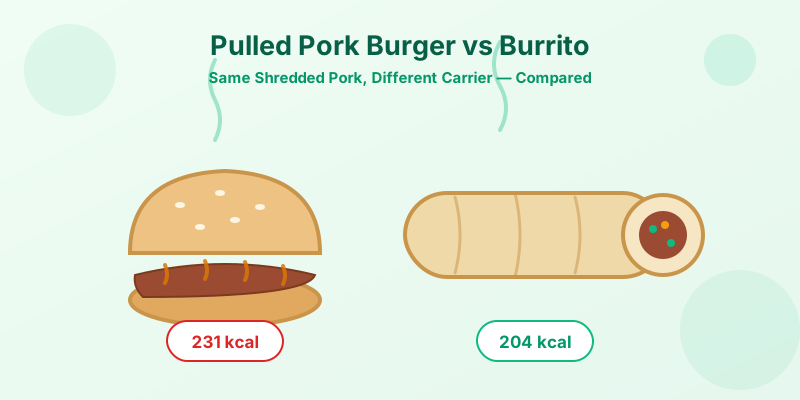
Pulled Pork Burger vs Burrito at a Glance (per 100g)
The Full Head-to-Head (per 100g)
| Metric | Pulled Pork Burger | Pulled Pork Burrito | Difference |
|---|---|---|---|
| Calories | 231 kcal | 204 kcal | Burrito 27 kcal lower |
| Protein | 13.5g | 11.92g | Burger 1.6g higher |
| Fibre | 3.0g | 2.81g | Nearly identical |
| Fat | 11.94g | 9.74g | Burrito 2.2g lower |
| Saturated Fat | 4.85g | 4.1g | Burrito 0.75g lower |
| Carbs | 17.3g | 17.17g | Virtually the same |
| Sugar | 6.3g | 1.81g | Burger ~3.5× higher — sauce is the driver |
| Sodium | 485mg | 507mg | Burrito 22mg higher |
Why the Burger Has So Much More Sugar
The pork itself isn't the sugar source — the carrier and its sauce are. Barbecue-style pulled pork burgers are typically finished with a sweet, tomato-and-vinegar-based barbecue sauce, and that's the most likely explanation for the burger's 6.3g of sugar per 100g against the burrito's 1.81g. The burrito's fillings lean more toward the pork and tortilla itself, without the same sweet glaze, which keeps its sugar figure much lower despite carrying a similar amount of fat.
Protein and Fibre: Burger's Small Edge
It's not a total sweep for the burrito. The pulled pork burger has slightly more protein (13.5g vs 11.92g per 100g) and slightly more fibre (3.0g vs 2.81g per 100g) — both modest differences, but consistent in the burger's favour. If protein-per-bite is your main priority rather than total calories or sugar, the burger edges ahead, just not by much.
What This Looks Like in a Whole Portion
Every figure above is per 100g of the HPB database entry — not per whole burger or burrito. HPB's own default portion for the whole burger is 238g (one "burger" unit), and for the burrito it's a much heftier 447g wrap once you include the tortilla and all the filling. Scaled up using HPB's own default portions, a whole burger comes to about 550 kcal — but a full-size burrito, at nearly double the burger's weight, ends up with meaningfully more total calories despite being leaner per 100g.
| Item | Whole Portion Calories (HPB default weight) | Protein | Sugar |
|---|---|---|---|
| Pulled Pork Burger (HPB 238g reference) | ~550 kcal | ~32g | ~15g |
| Pulled Pork Burrito (HPB 447g reference) | ~912 kcal | ~53g | ~8.1g |
Both whole-portion figures use HPB's own default portion weight for each dish (238g for the burger, 447g for the burrito) — actual values will still vary by stall, brand, bun size, and how generously the pork and sauce are portioned.
How to Order Smarter
Frequently Asked Questions
The burrito, at 204 kcal per 100g versus 231 kcal for the burger. That's about 27 fewer calories per 100g — roughly 12% lower — for what is essentially the same barbecue shredded pork filling.
The burger, by a wide margin — 6.3g of sugar per 100g versus just 1.81g for the burrito. That's almost 3.5 times more sugar in the burger, almost certainly from the barbecue sauce typically used in burger-style pulled pork.
It's not a clean sweep either way. The burrito wins on calories, fat, saturated fat and sugar per 100g. But the burger has slightly more protein (13.5g vs 11.92g) and fibre (3.0g vs 2.81g), and the burrito actually carries a touch more sodium (507mg vs 485mg). Overall the burrito is the lighter option, but not the better one on every metric.
The burger has slightly more protein at 13.5g per 100g, compared to 11.92g for the burrito — a difference of about 1.6g. Both are reasonable protein sources; neither is dramatically ahead.
HPB's figures are per 100g, but HPB also records a default whole-portion weight for each dish. Using HPB's own 238g default burger, a whole burger comes to about 550 kcal. Burritos run bigger: using HPB's own 447g reference portion, a whole burrito comes in at about 912 kcal, noticeably more than a burger despite being leaner per 100g.
Nutrition data sourced from the Health Promotion Board (HPB) Singapore food composition database. Calorie values are approximate and vary by brand, preparation and portion size. This article is for general wellness information only and does not constitute medical or dietary advice. Consult a registered dietitian for personalised nutrition guidance. Nutrition data referenced in this article is used under licence from the Health Promotion Board (HPB) of Singapore and may not be redistributed, republished, or reused commercially without NutriKaki's prior written permission.