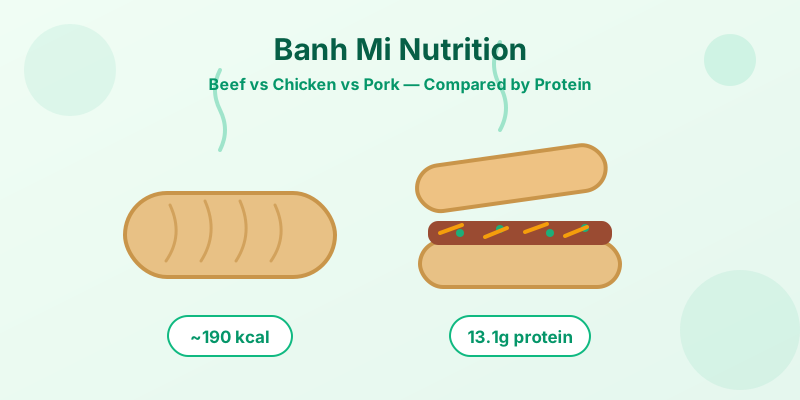
Banh Mi Nutrition: Beef vs Chicken vs Pork Filling Compared
Banh mi feels like the "light" option. It's a baguette, some pickled carrot and cucumber, a bit of coriander, maybe some chilli — how heavy can that be? Compared to a plate of char kway teow or a bowl of laksa, it looks positively virtuous.
But the protein filling inside that baguette matters more than most people assume. Using HPB Singapore's food composition data for beef, chicken and pork banh mi, the calorie gap between fillings is small — but the protein, fat and sugar profiles are not. One filling gives you noticeably more protein for the same calories. Another is cooked differently, which quietly changes its fat content. Here's the actual breakdown.
Banh Mi Nutrition at a Glance (per 100g)
Banh Mi Calories by Filling
| Filling | Calories (per 100g) | Protein | Key Difference | Verdict |
|---|---|---|---|---|
| Beef | 190 kcal | 13.1g | Baked; leanest protein-to-fat ratio of the three | ✅ Best for protein |
| Pork | 210 kcal | 11.6g | Baked, but highest calories, fat and sugar | ⚠️ Richer option |
| Chicken | 185 kcal | 9.4g | Stir-fried/pan-fried, not baked — fat nearly equals protein | ⚠️ Lowest kcal, not leanest |
Beef Banh Mi: The Protein Leader
Per 100g, beef banh mi has 190 kcal, 13.1g of protein, 6.43g of fat (2.09g saturated) and 20.0g of carbohydrate, with 431mg of sodium. It's baked rather than fried, which keeps the fat relatively low while the protein stays high. Of the three fillings compared here, beef gives you the most protein for the fewest calories — about 6.9g of protein per 100 kcal, versus roughly 5.5g for pork and 5.1g for chicken.
Chicken Banh Mi: Lowest Calories, But Fried Not Baked
Chicken banh mi comes in lowest on calories at 185 kcal per 100g, with 9.4g protein, 16.0g carbohydrate and 439mg sodium — actually the highest sodium of the three, despite being the lightest on calories. Worth noting: this chicken filling is stir-fried or pan-fried rather than baked like the beef and pork versions, and that shows up directly in the fat column — 9.25g of fat per 100g, almost matching its protein gram-for-gram. So while chicken banh mi looks like the "diet" choice by calorie count alone, it isn't automatically the leanest pick once you look at what's actually carrying those calories. On the upside, it does have the most fibre of the three at 2.1g per 100g.
Pork Banh Mi: The Richest of the Three
Pork banh mi is baked, like beef, but it's the heaviest option across the board: 210 kcal, 10.63g fat (3.48g saturated), 17.0g carbohydrate, 2.2g sugar and 417mg sodium per 100g, with 11.6g of protein — more than chicken but less than beef. It's not a bad choice, but among the three it sits in the middle rather than at either extreme: not the leanest, not the lowest-calorie, just the richest.
Complete HPB Nutrition Breakdown (per 100g)
| Filling | Calories | Protein | Fat | Carbs | Sodium |
|---|---|---|---|---|---|
| Beef | 190 kcal | 13.1g | 6.43g | 20.0g | 431mg |
| Chicken | 185 kcal | 9.4g | 9.25g | 16.0g | 439mg |
| Pork | 210 kcal | 11.6g | 10.63g | 17.0g | 417mg |
What This Looks Like in a Whole Sandwich
Every figure above is per 100g of the HPB database entry — not per whole sandwich. A real Vietnamese banh mi baguette sandwich typically weighs around 200 to 250g once you include the bread, protein, pickles and condiments. So as our own rough real-world translation (not an official HPB figure), a whole sandwich would land somewhere around 2 to 2.5 times the numbers above, depending on exactly how big and how packed it is.
| Filling | Approx. Whole Sandwich Calories | Approx. Protein | Approx. Sodium |
|---|---|---|---|
| Beef | ~380–475 kcal | ~26–33g | ~860–1,080mg |
| Chicken | ~370–460 kcal | ~19–24g | ~880–1,100mg |
| Pork | ~420–525 kcal | ~23–29g | ~830–1,040mg |
These whole-sandwich figures are an approximate translation for context, not official HPB data — actual values will vary by bakery, portion size and how generously the sandwich is filled.
How to Order Banh Mi Smarter
Frequently Asked Questions
Beef banh mi has the most protein at 13.1g per 100g, while being only 190 kcal — the highest protein-to-calorie ratio of the three fillings compared here (beef, chicken and pork), based on HPB Singapore data.
Chicken banh mi is the lowest at 185 kcal per 100g. But it's typically stir-fried or pan-fried rather than baked like the beef and pork versions, which pushes its fat content to 9.25g per 100g — almost matching its 9.4g of protein gram-for-gram.
All three fillings sit close together at 417-439mg of sodium per 100g. Scaled up to a real 200-250g baguette sandwich (our own approximate translation, not official HPB data), that could work out to roughly 830-1,100mg — potentially over half of the 2,000mg daily sodium limit recommended by HPB and the WHO.
HPB's figures are measured per 100g. A real banh mi baguette sandwich typically weighs 200-250g, so as a rough real-world estimate — not an official HPB figure — a whole sandwich could land anywhere from about 370 kcal (chicken) to 525 kcal (pork), depending on filling and size.
Not exactly. Pork banh mi is baked, like the beef version, but it does carry the highest calories (210 kcal), fat (10.63g) and sugar (2.2g) per 100g of the three, with less protein than beef. It sits in the middle of the lineup rather than at the very top or bottom.
Nutrition data sourced from the Health Promotion Board (HPB) Singapore food composition database. Calorie values are approximate and vary by brand, preparation and portion size. This article is for general wellness information only and does not constitute medical or dietary advice. Consult a registered dietitian for personalised nutrition guidance. Nutrition data referenced in this article is used under licence from the Health Promotion Board (HPB) of Singapore and may not be redistributed, republished, or reused commercially without NutriKaki's prior written permission.