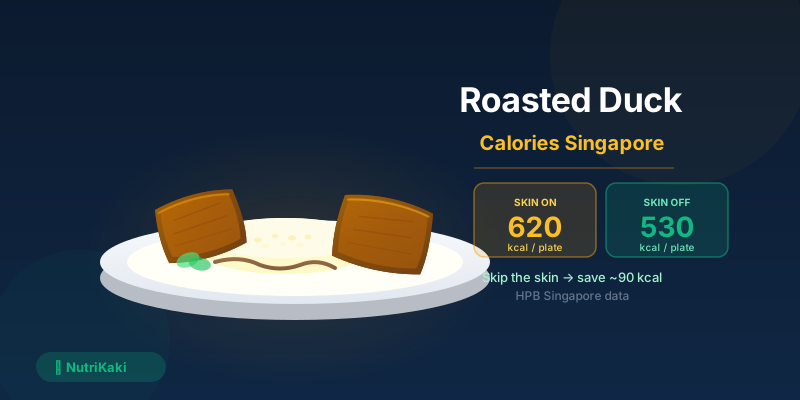
Roasted Duck Calories Singapore: Duck Rice, Noodles & Every Order Compared
Roasted duck rice is one of Singapore's most beloved hawker dishes — and one of the more misunderstood ones nutritionally. Unlike chicken rice, which gets scrutinised often, duck rice tends to fly under the radar. But a standard plate of roasted duck rice contains 689 calories, based on HPB's standard 411g plate, with a significant portion coming from the fat-rich skin and gravy.
This guide breaks down the exact calories for every roasted duck order at a Singapore hawker centre — from duck rice with and without skin, to duck noodles and duck porridge — so you can make an informed choice.
Roasted Duck Calories at a Glance
Full Nutrition Breakdown
| Duck Dish | Serving | Calories | Protein | Fat | Carbs | Sodium |
|---|---|---|---|---|---|---|
| Roasted duck rice (skin on) | 1 plate (~411g) | 689 kcal | 33g | 22g | 92g | ~641mg |
| Roasted duck rice (skin off)* | 1 plate (estimate) | ~589 kcal | ~30g | ~12g | 92g | ~580mg |
| Duck noodles (dry) | 1 bowl (~321g) | 474 kcal | 26g | 20g | 47g | ~1,626mg |
| Duck noodles (soup) | 1 bowl (~758g) | 523 kcal | 27g | 9.5g | 62g | ~3,472mg |
| Duck porridge (congee) | 1 bowl (~400g) | 416 kcal | 40g | 9g | 37g | ~888mg |
| Duck meat only (no rice, no skin) | 100g | 201 kcal | 23.5g | 11g | 0g | ~65mg |
*HPB does not carry a separate "skin off" version of roasted duck rice as its own database entry — the figures above are our own estimate, not a verified HPB value.
Why Duck Rice Is Higher in Calories Than It Looks
Roasted duck rice has three main calorie contributors: the white rice, the duck meat with skin, and the accompanying sauce or gravy. The rice alone accounts for approximately 220–250 kcal depending on portion. The duck pieces — typically 2 to 3 pieces per plate — contribute 250–320 kcal with skin on or 150–200 kcal with skin removed. The plum sauce, soy-based dipping sauce, or gravy adds a further 30–80 kcal.
The skin is the pivotal variable. Duck skin is significantly fattier than chicken skin — it contains roughly 28g of fat per 100g of skin — and a typical serving of roasted duck includes two to three pieces, each with a generous layer of skin. Removing all of the skin can save 80 to 120 calories per plate.
Roasted Duck vs Braised Duck vs Peking Duck
| Duck Type | Preparation | Calories (per plate) | Key difference |
|---|---|---|---|
| Roasted duck (烧鸭) | Char siu-style roasting | 689 kcal | Crispy skin, dry heat rendering |
| Braised duck (卤鸭 / lor ark) | Slow-braised in soy/spices | 600–640 kcal | Skin stays soft, absorbs braising liquid |
| Peking duck | Air-dried, then roasted | 680–750 kcal | Thicker skin, served with pancake + hoisin |
| Duck porridge | Congee with duck pieces | 416 kcal | Watered-down congee base, smaller duck portion |
Roasted Duck vs Chicken Rice: Which Is Healthier?
This is one of the most common hawker food questions. The answer depends on how you order.
Steamed chicken rice comes in at around 490 kcal. Roasted chicken rice is closer to 643 kcal. Roasted duck rice sits at around 689 kcal. So duck rice is in the same ballpark as roasted chicken rice, and both are notably higher than steamed chicken rice.
However, duck has one key nutritional advantage over chicken: it is significantly higher in iron. Duck meat contains nearly three times the iron of chicken, making it a better choice for anyone monitoring their iron intake or at risk of anaemia. Duck also provides more zinc and selenium than chicken.
How to Order Roasted Duck to Reduce Calories
Roasted Duck vs Other Singapore Hawker Mains
| Hawker Dish | Calories |
|---|---|
| Duck porridge | 416 kcal |
| Curry laksa | 429 kcal |
| Steamed chicken rice | 490 kcal |
| Roasted duck rice (skin off)* | ~589 kcal |
| Roasted chicken rice | 643 kcal |
| Roasted duck rice (skin on) | 689 kcal |
| Nasi lemak with chicken wing | 831 kcal |
Is Roasted Duck Rice Good for Weight Loss?
Roasted duck rice is not a weight-loss meal, but it can fit into a calorie-controlled diet if ordered carefully. The key modifications are: remove the skin (saves ~100 kcal), ask for less rice (saves ~110 kcal), and take sauce on the side. With these adjustments, you can bring a duck rice plate down to approximately 420–470 kcal — similar to a bowl of fishball noodles.
Duck meat without skin is also a good protein source (~24g per 100g), which helps with satiety and muscle retention during weight loss. The higher iron content versus chicken is an added benefit for those who are active and need to support red blood cell production.
For a full guide to losing weight while eating hawker food, see our hawker food weight loss guide.
Track Your Duck Rice Intake with NutriKaki
Know exactly what's in your duck rice plate
NutriKaki uses HPB Singapore data to give you accurate calorie and nutrition counts for roasted duck rice, braised duck, and every hawker dish you eat.
Track duck rice calories free on NutriKaki → Download NutriKaki on iOS — App Store → Download NutriKaki on Android — Google Play →Frequently Asked Questions
Related: Chicken Rice Calories · Sodium in Hawker Food · Hawker Food Weight Loss Guide