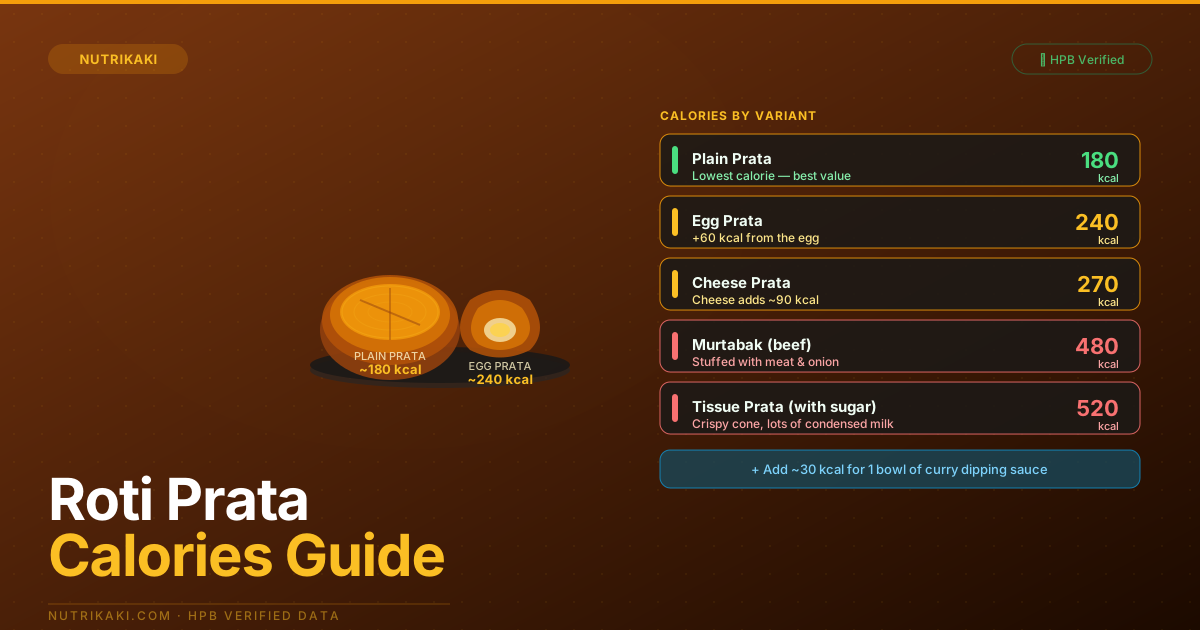
Roti Prata Calories: Every Variant From Plain to Tissue Prata
Roti prata is one of Singapore's most beloved breakfast foods — and the calorie numbers can be counterintuitive. Order a plain prata (HPB's standard 141g piece) and you're already at 496 kcal. Order tissue prata with condensed milk, despite its reputation as the indulgent option, and HPB's data puts it at just 299 kcal — lighter than a plain prata, though it's mostly sugar with almost no protein.
The gap between the lightest and heaviest prata order is still large — it just doesn't run in the direction most people assume. Mutton murtabak tops the list at 849 kcal, nearly triple a single tissue prata. And unlike chicken rice or cai png, the toppings and preparation method are built into the prata itself — you can't just ask for "less oil" after it's been flipped on the tawa.
This guide breaks down every common prata variant using HPB Singapore data so you know exactly what you're ordering — before you order it.
Roti Prata Calories at a Glance
*HPB has no pure cheese-only prata entry — 459 kcal is the closest match, the "egg, onion & cheese" combo. Pure onion prata isn't in HPB's database either; 389 kcal is the closest match, "egg & onion" prata.
The Full Calorie Breakdown
| Prata Variant | Calories (per piece) | Key Difference | Verdict |
|---|---|---|---|
| Plain Prata | 496 kcal (HPB: 352 kcal/100g × 141g piece) | Dough + ghee only | ⚠️ Higher than most assume |
| Egg Prata | 331 kcal (278 kcal/100g × 119g) | One egg folded in | ✅ Excellent — fewer kcal, more protein than plain |
| Egg & Onion Prata | 389 kcal (220 kcal/100g × 177g) | HPB has no pure onion-only prata; this is the closest match | 👍 Good |
| Mushroom Prata (estimate) | ~210–230 kcal — not an HPB entry | Cooked mushrooms inside | 👍 Good (unverified) |
| Cheese Prata | 459 kcal (closest HPB match: egg, onion & cheese combo, 248 kcal/100g × 185g) | No pure cheese-only prata in HPB's database | ⚠️ Moderate |
| Egg + Cheese Prata | 459 kcal (same HPB combo entry as above) | Egg, onion & cheese together | ⚠️ Moderate |
| Murtabak (Beef) (estimate) | ~450–510 kcal — no beef murtabak entry in HPB | Minced beef + egg + onion stuffing | ❌ Occasional treat (unverified) |
| Murtabak (Mutton) | 849 kcal (246 kcal/100g × 345g) | Large stuffed portion of meat, egg and onion | ❌ Heaviest item on this list |
| Tissue Prata (plain, no topping) (estimate) | ~380–420 kcal — HPB has no distinct plain tissue-prata SKU | Stretched thin, lots of ghee, crispy | 👍 Unverified estimate |
| Tissue Prata (condensed milk) | 299 kcal (267 kcal/100g × 112g) | + condensed milk + sugar, thinner dough | ✅ Lower kcal than expected, but mostly sugar |
Note: because these are HPB's own default portion sizes, some comparisons don't scale the way you'd expect — plain prata's default 141g piece is simply larger than egg prata's 119g piece or tissue prata's 112g piece, so "adding" egg or condensed milk doesn't always mean "adding calories."
Why Tissue Prata Is Lighter Than You'd Think
Tissue prata is made by stretching the dough extremely thin and folding it into a large cone — which looks indulgent, but HPB's default tissue-prata-with-condensed-milk portion works out to just 299 kcal, noticeably less than a single plain prata at 496 kcal. The thin, stretched dough uses less total flour and ghee per piece than a thicker plain prata, even though the wide, crispy shape looks like it should absorb more oil.
That doesn't make it a health food. The condensed milk and sugar on top provide almost no protein or fibre, so tissue prata is still best treated as an occasional treat rather than a nutritious swap for plain prata. But if you've been avoiding it purely because you assumed it was the highest-calorie option on the menu, the HPB numbers say otherwise — mutton murtabak, at 849 kcal, is the actual calorie-heaviest item on this list.
What the Curry Dip Adds
No prata guide is complete without the curry. Most people don't count the dipping sauce, but it adds up — especially if you're ordering fish head curry or chicken curry with coconut milk.
| Curry Type | Calories (small bowl / dip) | Notes |
|---|---|---|
| Dhal curry (lentil) | ~60–90 kcal | ✅ Lowest fat option |
| Chicken curry (light) | ~80–120 kcal | 👍 Moderate |
| Fish curry (coconut) | ~100–150 kcal | ⚠️ Coconut milk adds fat |
| Mutton curry (rich) | ~130–180 kcal | ⚠️ High fat, high sodium |
Two Plain vs One Egg: Which Is Better?
This is the most common prata dilemma. Most people eat two pieces — and the question is whether to have two plain or one egg prata.
| Order | Calories | Protein | Satiety |
|---|---|---|---|
| 2 × Plain Prata | 992 kcal | ~6g | Moderate |
| 1 × Egg Prata + 1 × Plain Prata | 827 kcal | ~12g | ✅ Higher — egg protein helps |
| 2 × Egg Prata | 662 kcal | ~18g | High |
| 1 × Tissue Prata (condensed milk) | 299 kcal | ~5g | ⚠️ Lowest calories, but mostly sugar |
Per HPB data, egg prata's default portion is smaller and lower-calorie than plain prata's, so both egg-containing orders above actually cost fewer calories than two plain pratas — while delivering far more protein. The single tissue prata has the lowest calorie count of the four, but with only ~5g of protein and mostly added sugar, it isn't the more filling or nutritious choice just because the number looks smaller.
How to Order Prata Smarter
Roti Prata vs Other Singapore Breakfasts
| Breakfast | Approx. Calories | Verdict |
|---|---|---|
| Kaya toast + soft-boiled eggs + kopi-o | ~280–330 kcal | ✅ Light and balanced |
| Congee / porridge with fish | ~250–320 kcal | ✅ Very light |
| 1 Egg + 1 Plain prata + dhal | ~870–920 kcal | ⚠️ Heavier than it looks, but good protein |
| 2 × Plain prata + dhal | ~1,050–1,080 kcal | ❌ Heavy breakfast |
| Nasi lemak (standard, with chicken wing) | 831 kcal | ⚠️ Heavy for breakfast |
| Murtabak (mutton) + curry | ~920–1,010 kcal | ❌ More a lunch portion |
| Tissue prata (condensed milk) + teh tarik | ~370–430 kcal | 👍 Lighter than expected, but mostly sugar |
Frequently Asked Questions
One plain roti prata, using HPB's standard 141g piece, is approximately 496 calories — higher than most people expect, and higher than egg prata (331 kcal). Most people eat two pieces, making a typical plain prata order close to 992 kcal before adding curry.
Two plain pratas with dhal curry already comes to roughly 1,050 to 1,080 kcal — a heavy breakfast. Prata is cooked in ghee and is low in fibre and protein, so it's easy to eat more than planned. Interestingly, tissue prata with condensed milk is actually lighter at just 299 kcal, though it's still mostly sugar with very little protein.
One egg prata is approximately 331 calories using HPB's default 119g portion — around 165 calories fewer than a plain prata, while also providing meaningful protein — making it the better choice if you're eating prata regularly.
Dhal curry (a small bowl for dipping) adds around 60 to 90 calories. Fish or mutton curry with coconut milk can add 100 to 180 calories. A full bowl of dhal curry — HPB's 427g default serving, not a dipping portion — is closer to 432 calories.
Mutton murtabak is the most calorie-dense at 849 calories per HPB's default serving, due to its large stuffed portion of meat, egg and onion. Tissue prata with condensed milk, despite its dessert reputation, is actually one of the lighter options at just 299 calories.
One or two egg pratas (331 to 662 kcal total per HPB data) is a manageable breakfast within a calorie-controlled day, since egg prata's default HPB portion is smaller and lower-calorie than plain prata's, while providing more protein. The key is stopping at two pieces and pairing with dhal curry rather than richer options. Tissue prata should still be reserved for occasional treats — its low calorie count doesn't make up for the lack of protein and fibre.
Nutrition data sourced from the Health Promotion Board (HPB) Singapore food composition database. Calorie values are approximate and vary by stall, dough thickness, ghee quantity, and portion size. This article is for general wellness information only and does not constitute medical or dietary advice. Consult a registered dietitian for personalised nutrition guidance. Nutrition data referenced in this article is used under licence from the Health Promotion Board (HPB) of Singapore and may not be redistributed, republished, or reused commercially without NutriKaki's prior written permission.