Oats vs Semolina Calories: Why Your Breakfast Isn't 376 kcal
If you've looked up rolled oats and seen "376 kcal per 100g," don't panic — that is not the calorie count of your breakfast bowl. It's the dry, uncooked oats straight from the packet, before you've added any water or milk and put them on the stove. A real bowl of cooked oatmeal is a completely different number, because oats soak up several times their own weight in liquid as they cook.
This mix-up is the single most common mistake people make when logging oats, so it's worth explaining clearly before we get to the numbers. We'll also compare oats to cooked semolina (sooji, rava, or farina), a grain that Singapore households often use for porridge — and one where the HPB figure is already on a cooked basis, making it a genuinely fair comparison to a real bowl.
Oats vs Semolina at a Glance
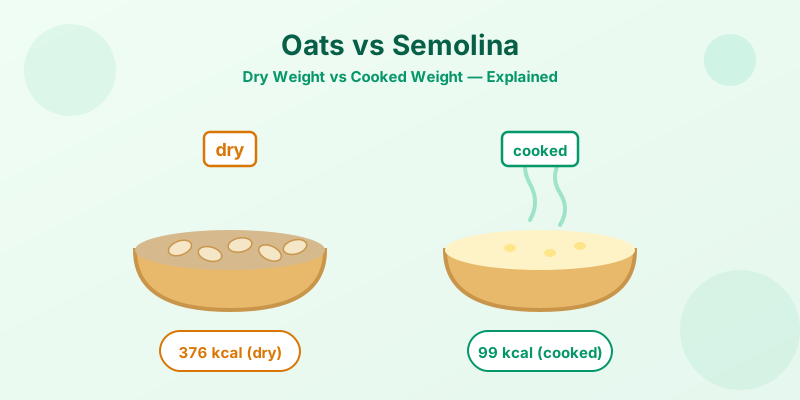
Note: these two figures are measured at different stages — oats dry, semolina cooked — so they aren't directly comparable as shown. See the explanation below.
Why This Comparison Needs a Caveat
The HPB entry for rolled oats has no cooking method listed, which means it reflects the raw product as sold — 376 kcal, 11.0g protein, 9.5g fibre, 8.7g fat and 58.1g carbohydrate, all per 100g of dry oats. The HPB entry for cooked semolina, by contrast, is explicitly listed as boiled — 99 kcal, 3.4g protein, 1.0g fibre, 0.4g fat and 19.6g carbohydrate per 100g, already on a prepared, ready-to-eat basis.
Putting these two numbers side by side without explaining the difference would make oats look nearly four times "worse" than semolina, which isn't a fair or accurate takeaway. The honest comparison is either dry oats against dry semolina, or a cooked bowl of oatmeal against a cooked bowl of semolina porridge — not one dry figure against one cooked figure.
Full Nutrition Breakdown (As Measured by HPB)
| Grain | Basis | Calories /100g | Protein | Fibre | Fat | Carbs |
|---|---|---|---|---|---|---|
| Rolled oats | Dry / raw | 376 kcal | 11.0g | 9.5g | 8.7g | 58.1g |
| Semolina | Cooked / boiled | 99 kcal | 3.4g | 1.0g | 0.4g | 19.6g |
On a dry-weight basis, oats are clearly more nutrient-dense than semolina — more protein, over nine times the fibre, and more fat (largely from the oat's natural oils, not added fat). That's expected: whole rolled oats retain the bran and germ, while semolina is a more refined product ground from durum wheat. What it doesn't tell you is which one makes the bigger or smaller bowl once cooked, since only the semolina figure reflects a finished dish.
What This Means for Your Actual Breakfast Bowl
When you cook rolled oats — whether on the stove or overnight-soaked — they absorb a large amount of liquid and expand significantly. That means 100g of dry oats turns into a noticeably larger cooked portion, and the calories from that 100g get spread across more weight once water or milk is stirred in. As a rough rule of thumb for how cooking dilutes a dry grain, expect the finished dish to weigh roughly 3 to 4 times the dry starting weight, spreading the same calories over more grams.
Cooked semolina works the same way in principle — it's also cooked with water or milk — but because the HPB figure for semolina is already on a cooked basis (99 kcal/100g), you don't need to do any mental adjustment. It's ready to compare directly to what's in your bowl.
Choosing Between Oats and Semolina
Frequently Asked Questions
That 376 kcal figure is for dry, uncooked rolled oats — the oats straight from the packet before any water or milk is added. It is not the calorie count of a cooked bowl of oatmeal. Once oats are cooked, they absorb several times their dry weight in liquid, so a real serving is much less calorie-dense per 100g.
No. A prepared bowl of oatmeal is diluted with water or milk during cooking, typically ending up in a much lower calorie range per 100g than the dry oats you started with, since the weight of the bowl is now mostly absorbed liquid. The 376 kcal figure only applies to the dry product before cooking.
Cooked semolina (also called farina, sooji or rava, and commonly boiled into porridge) is 99 kcal per 100g. Unlike the rolled oats figure, this HPB value is already measured on a cooked, prepared basis, so it directly reflects a real bowl of semolina porridge.
Dry rolled oats contain 11.0g of protein per 100g, compared to 3.4g per 100g for cooked semolina. This comparison isn't perfectly apples-to-apples since one figure is dry and the other cooked, but oats generally provide more protein and fibre per typical serving of dry grain used.
Because they're measured at different stages. Dry oats (376 kcal/100g) haven't absorbed any cooking liquid yet, while cooked semolina (99 kcal/100g) already has. Comparing them directly makes oats look far worse than they are in practice — the fair comparison is dry oats against dry semolina, or cooked oatmeal against cooked semolina porridge.
Nutrition data sourced from the Health Promotion Board (HPB) Singapore food composition database. Calorie values are approximate and vary by brand, preparation and portion size. This article is for general wellness information only and does not constitute medical or dietary advice. Consult a registered dietitian for personalised nutrition guidance. Nutrition data referenced in this article is used under licence from the Health Promotion Board (HPB) of Singapore and may not be redistributed, republished, or reused commercially without NutriKaki's prior written permission.