Prawn Noodle Soup Calories Singapore: Wet vs Dry Hae Mee — Full Breakdown
Prawn noodles — known locally as hae mee — are one of Singapore's most comforting hawker bowls: a rich, orange-hued broth simmered from prawn shells and pork bones, ladled over noodles with a few shelled prawns, pork ribs, and a scoop of sambal chilli on the side. Because the broth looks light and the toppings look lean, it has a reputation as one of the "healthier" noodle options at the hawker centre. But is that reputation actually backed by the numbers?
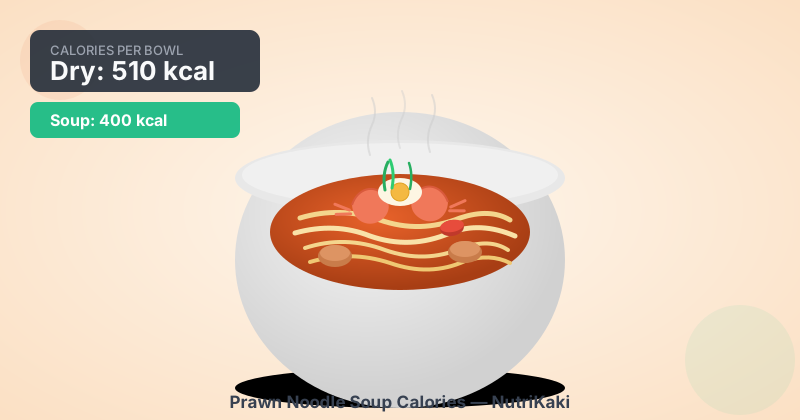
The short answer, per HPB Singapore's official reference bowls: soup-style prawn noodles run approximately 479 kcal (732g bowl), while the dry version, tossed in sambal chilli and shallot oil, comes in a little lower at around 389 kcal (396g bowl). That may be the opposite of what you'd expect — the dry style is actually more calorie-dense gram for gram (130 kcal/100g vs 66 kcal/100g for soup), but HPB's standard soup bowl is nearly double the weight of the dry bowl because of the broth, so its total calorie count ends up higher. Sodium tells an even starker story: soup carries roughly 3,378mg per bowl — well over the entire day's recommended limit in one meal — against 1,321mg for dry. This guide breaks down what that means component by component so you know where the calories and sodium sit, and how to order a lighter, lower-sodium bowl without losing the flavour that makes hae mee worth queuing for.
Wet vs Dry Prawn Noodles: Calorie Comparison Table
The table below shows HPB Singapore's official reference-bowl figures for soup and dry hae mee, plus estimated adjustments for a hard-boiled egg or a smaller noodle portion — those adjustments aren't separate HPB entries, so they're clearly marked as estimates.
| Serving Style | Calories | Protein | Carbs | Fat | Sodium |
|---|---|---|---|---|---|
| Soup Prawn Noodles (HPB, 732g bowl) | 479 kcal | 24g | 78g | 8g | 3,378mg |
| Dry (Sambal-Tossed) (HPB, 396g bowl) | 389 kcal | 15g | 60g | 10g | 1,321mg |
| Soup, with hard-boiled egg | ~550–560 kcal (estimate) | ~30–31g (estimate) | ~78–80g (estimate) | ~13–14g (estimate) | ~3,400mg (estimate) |
| Soup, half portion noodles | ~380–400 kcal (estimate) | ~20–22g (estimate) | ~55–60g (estimate) | ~6–7g (estimate) | ~3,000mg (estimate) |
Note: The first two rows are HPB Singapore's official measured values for a standard reference bowl. The egg and half-portion rows are our own estimates layered on top of those HPB figures, not separate HPB entries — actual calories vary by stall and portion size.
Breaking Down Each Component
HPB's database records the dish as a whole, not ingredient by ingredient, so the component figures below are our own estimate of where a bowl's calories typically come from — useful for understanding the dish, but not a separate HPB data point. To see where the calories come from, it helps to split the bowl into five parts: the noodles, the prawns, the pork ribs, the broth, and the sambal or frying oil.
Noodles: Yellow Mee, Bee Hoon, or Both
Most stalls serve a mix of yellow egg noodles and thin rice vermicelli (bee hoon), giving you the chewiness of one and the broth-soaking softness of the other. A standard hawker portion uses roughly 130 to 160 g of cooked noodles, contributing approximately 200 to 240 kcal. This carbohydrate base is comparable to other hawker noodle dishes and is the single largest calorie contributor in the soup version.
Prawns: Lean, Modest, and Worth Keeping
A standard serving of 3 to 4 shelled prawns (about 60 to 80 g) adds only 60 to 90 kcal. Prawns are a genuinely lean protein — low in fat, moderate in cholesterol, and a good source of selenium and vitamin B12. Of all the components in the bowl, the prawns themselves are the least likely place to cut calories, and arguably the most nutritionally valuable.
Pork Ribs: Small Portion, Real Contribution
A typical serving includes one or two small pork ribs (50 to 70 g total), adding around 90 to 130 kcal. Because the ribs are simmered rather than fried, most of the calories come from the meat and bone fat itself rather than added cooking oil — making this a moderate but not excessive contributor to the overall total.
The Broth: Low Calorie, High Sodium
This is the part that most surprises people. The signature orange broth — simmered for hours from prawn shells and heads, pork bones, and often dried anchovies or belacan — is calorically light on its own, contributing an estimated 20 to 40 kcal per ladle. But that concentrated simmering process also concentrates sodium: per HPB Singapore's official reference bowl, a full serving of soup-style prawn noodles carries approximately 3,378mg of sodium — well over the entire day's recommended limit in one meal, and among the highest of any hawker noodle soup. If you are watching blood pressure, the broth — not the noodles or prawns — is where the real caution lies.
Sambal and Oil: Where Dry Style Pulls Ahead
The dry version is tossed with a spoonful of sambal chilli paste and often a drizzle of fried shallot oil, which is part of why it's more calorie-dense gram for gram than the soup version (130 vs 66 kcal per 100g, per HPB). Sambal and shallot oil also carry their own sodium, which is part of why the dry bowl still lands over half the daily sodium limit despite having no broth.
Soup vs Dry: It's the Portion Size, Not Just the Cooking Method
The instinct that "dry, oil-tossed food must be worse than a clear-looking soup" doesn't hold up against HPB's own measured data here. Gram for gram, dry prawn noodles are almost twice as calorie-dense as soup — the sambal and oil pack a real punch per bite. But HPB's reference bowl for the soup version (732g) is nearly double the weight of the dry reference bowl (396g), because a proper bowl of soup hae mee comes with a full serving of broth. That extra volume is what pushes soup's total calories — and especially its sodium — above the dry version, even though soup "feels" lighter. If you're optimising purely for calories or sodium, asking for less broth (or a smaller bowl) does more than choosing dry over soup.
How to Order Smarter at the Hawker Centre
You don't need to skip hae mee to manage your intake. A few small ordering adjustments can realistically save 100 to 200 kcal and cut a significant amount of sodium.
- Ask for less broth, or a smaller bowl. Per HPB's figures, the soup version's larger, broth-heavy portion is the main reason its calorie and sodium totals run higher than dry — cutting the broth volume matters more than choosing dry over soup.
- Drink only part of the broth. This is the single most effective move for sodium — a full bowl carries an estimated 3,378mg, well over the daily limit, and most of that is in the liquid, not the noodles or toppings.
- Ask for less oil or sambal on the side. If ordering dry, request the sambal separately so you control how much goes on the noodles.
- Request half portion noodles (半份面). Cutting the noodle portion trims both calories and carbs, and leaves room for extra prawns.
- Skip the hard-boiled egg if you're watching calories. A standard egg adds around 70 kcal (estimate) — worth keeping if you need the protein, worth skipping if you don't.
- Ask for extra prawns instead of extra pork ribs. Prawns give you more protein per calorie, making this an easy upgrade at stalls that allow add-ons.
Comparing Prawn Noodles to Other Common Hawker Noodle Dishes
| Hawker Dish | Approx. Calories (standard serving) | Notes |
|---|---|---|
| Soup prawn noodles (hae mee) | 479 kcal (HPB, 732g bowl) | Low fat; very high sodium broth (3,378mg) |
| Dry prawn noodles (sambal) | 389 kcal (HPB, 396g bowl) | More calorie-dense per gram, but a smaller official portion |
| Wonton mee (soup) | 644 kcal | Notably higher; lower sodium than prawn broth |
| Bak chor mee (soup) | ~330–400 kcal | Slightly lighter; still high sodium |
| Hokkien mee (fried) | 830 kcal | Wok-fried in prawn stock and lard |
| Laksa | 429 kcal | Coconut-heavy gravy, but a smaller bowl than you'd expect |
In context, soup prawn noodles sit in the middle of the pack on calories — above bak chor mee and laksa, below wonton mee and hokkien mee, per HPB's official reference bowls. Prawn noodle soup's real outlier trait isn't calories at all, but sodium: at 3,378mg per bowl, it carries more sodium than any other dish in this comparison, which is worth keeping in mind if you eat hae mee regularly.
Tracking Prawn Noodles with NutriKaki
Prawn noodle soup is one of the dishes you can log directly in NutriKaki, Singapore's hawker-first calorie tracker powered by HPB food composition data. Instead of guessing with a generic "noodle soup" entry from a global food database, NutriKaki surfaces values calibrated to actual Singapore hawker portions — soup or dry style, with or without egg.
You can also adjust the serving size within the app to reflect a half-noodle order, extra prawns, or whether you finished the broth. The app tracks your full meal against your daily targets — including sodium — so you can see at a glance how a bowl of hae mee fits into the rest of your day.
Frequently Asked Questions
Per HPB Singapore's official reference bowl (732g), soup-style prawn noodles (hae mee) contain approximately 479 kcal. Soup is less calorie-dense per gram than the dry version, but HPB's standard soup bowl is nearly double the weight of its dry bowl because of the broth, so the total calorie count ends up similar to, or higher than, the dry version.
Not necessarily. Per HPB's official reference bowls, dry prawn noodles (396g bowl) come in at approximately 389 kcal, somewhat lower than soup-style prawn noodles at 479 kcal (732g bowl). Dry noodles are more calorie-dense gram for gram because of the sambal and oil, but the soup version's larger, broth-heavy bowl gives it a higher total calorie count in HPB's data.
HPB does not break the dish down by individual ingredient, but as a rough estimate, a standard serving of 3 to 4 shelled prawns (roughly 60–80 g) adds about 60 to 90 kcal, while a portion of pork ribs (about 50–70 g) contributes around 90 to 130 kcal. Both are relatively lean protein sources.
Yes, extremely so. Per HPB Singapore's official 732g reference bowl, soup-style prawn noodles carry approximately 3,378mg of sodium — well over the entire HPB-recommended daily limit of 2,000mg in a single bowl. Dry-style prawn noodles (396g bowl) carry around 1,321mg. The broth, simmered from prawn shells, pork bones, and often dried anchovies or belacan, is the main source.
The most effective strategies are: (1) ask for less broth or a smaller bowl, since the soup version's larger portion is the main reason its calorie and sodium totals are so high; (2) ask for less oil or fried shallots if ordering dry; (3) request half portion noodles; (4) skip the hard-boiled egg if watching calories, saving around 70 kcal; and (5) drink only part of the broth, which is the single most effective move for cutting sodium.
Calorie values are estimates based on HPB Singapore food composition data and standard Singapore hawker serving sizes. Actual values vary by stall, portion size, and cooking method. This content is for general informational purposes only and does not constitute medical or dietary advice. Consult a registered dietitian for personalised nutrition guidance. Nutrition data referenced in this article is used under licence from the Health Promotion Board (HPB) of Singapore and may not be redistributed, republished, or reused commercially without NutriKaki's prior written permission.